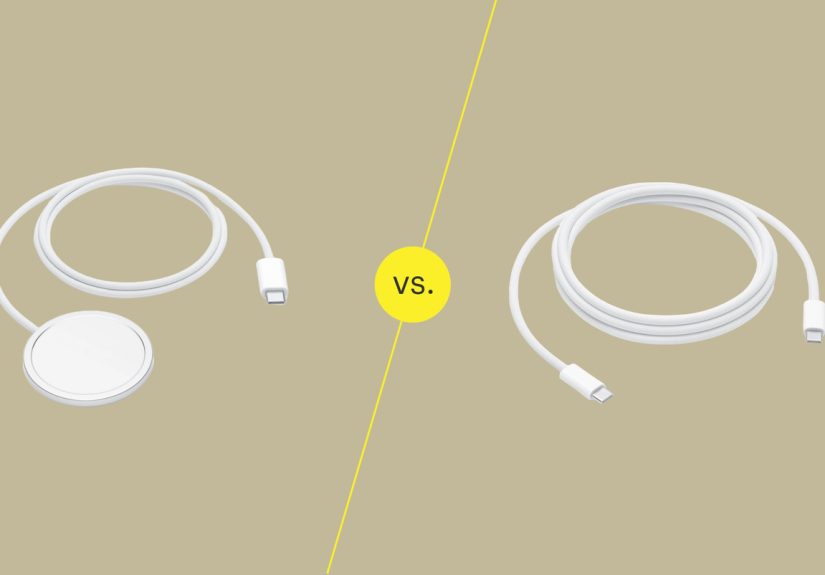
Table of Contents >> Show >> Hide
- Why this comparison matters more than ever
- Wired charging still wins the speed race
- Why MagSafe became a real contender
- The hidden trade-offs: heat, efficiency, and battery wear
- Not all magnetic charging is created equal
- So which iPhone charging method should most people choose?
- The surprising winner: MagSafe, for everyday life
- Real-world experiences: what living with MagSafe and wired charging actually feels like
- SEO Tags
If you ask the internet whether MagSafe or wired charging is better for an iPhone, the answers usually split into two camps. One side acts like cables are the last honest tool left in modern civilization. The other talks about MagSafe as if snapping a puck onto the back of an iPhone is the technological equivalent of inner peace. As usual, both sides are a little dramatic.
The truth is more interesting. Wired charging is still the speed king in plenty of real-world situations, especially when your battery is hanging on by a single percent and your ride is three minutes away. But MagSafe has improved enough that the old joke, “wireless charging is just slow charging with better marketing,” no longer tells the whole story. On newer iPhones, especially recent flagship models, MagSafe is no longer just convenient. It is legitimately competitive for everyday use.
So who wins? Surprisingly, for a huge number of iPhone owners, MagSafe is the better overall charging experience, even though wired charging still wins on raw speed, efficiency, and emergency top-offs. That sounds contradictory, but it is really just life. The fastest option is not always the best option, and the best option is not always the one with the biggest wattage printed on the box.
Why this comparison matters more than ever
For years, this debate was easy. Wired charging was clearly faster, more efficient, and cheaper. Wireless charging was fine for nightstands, office desks, and people who enjoy placing their phone on a pad three times before it finally decides to cooperate. Then MagSafe came along and fixed one of wireless charging’s biggest annoyances: alignment.
That magnetic snap matters more than it sounds. Regular Qi charging can be fussy. A phone can sit slightly off-center and still appear to be charging, just not very well. MagSafe removes much of that guesswork. You place the charger near the back of the iPhone, it clicks into position, and the connection is more consistent. Less fiddling, fewer fake-outs, and a much better shot at waking up to a battery that is actually full instead of “technically trying its best.”
On newer iPhones, MagSafe also got faster. That changes the conversation. Once wireless charging moves from “painfully slower” to “good enough for most days,” convenience starts carrying serious weight. And convenience, as it turns out, is undefeated in human decision-making. That is why people use food delivery apps, voice notes, and sweatpants with suspicious confidence.
Wired charging still wins the speed race
Let’s give the cable its flowers. If your main goal is to get the most battery in the shortest amount of time, wired charging is still the safer bet. Apple’s fast-charging setup has long made cables the most dependable option for quickly getting an iPhone back in action. In real-world testing across multiple iPhone generations, wired charging tends to deliver more battery percentage in the first 30 minutes than MagSafe does. That matters because the first half hour is when most people care the most. Nobody says, “I have six leisurely hours to charge my phone before I leave the house.”
Wired charging also wastes less energy. That is one of the biggest differences between cable charging and wireless charging, even when MagSafe is in the picture. A direct wired connection transfers power more efficiently, which usually means less energy loss and less excess heat. In plain English: more of the electricity you pay for goes into the battery instead of becoming warm air and mild disappointment.
There is also the matter of predictability. Plug in a cable, and you know what you are getting. No special positioning. No wondering whether your case is interfering. No concern that your magnetic wallet, ring grip, or mysterious accessory from an online marketplace is quietly sabotaging the whole operation.
When wired is the obvious choice
Wired charging is the better choice if you regularly need fast top-ups before heading out, travel often and want one charger for multiple devices, care about efficiency, or use your phone hard while charging. It is also the smart move for drivers, power users, gamers, and anyone whose screen time report should probably remain private.
If your battery is at 8% and your day is not waiting for you, use a cable. This is not the moment for philosophy.
Why MagSafe became a real contender
Now for the twist. MagSafe has matured from a neat trick into a genuinely strong everyday charging system. The biggest reason is friction, or rather the lack of it. You do not have to hunt for a cable end, untangle anything, squint at a port, or do that tiny little twist when the connector somehow refuses to go in despite being correctly oriented. You just snap and charge.
That ease changes behavior. People are more likely to top up their phone for 15 minutes at a desk or on a kitchen counter if charging feels effortless. That means battery anxiety may go down even if the peak charging speed is not the absolute fastest available. In real life, the best charger is often the one you actually use consistently.
MagSafe also turns the phone into something more usable while charging. A stand-style MagSafe charger can hold an iPhone upright for video calls, StandBy mode, notifications, recipes, or bedtime clock duty. A cable can do that too, technically, but usually in the same way a shopping bag can technically be a hat. The wireless setup is simply cleaner.
And on recent iPhones, MagSafe is no longer stuck in the slow lane. Newer models have narrowed the gap enough that for many daily routines, the convenience advantage is more important than the remaining speed disadvantage. If you charge in short bursts throughout the day, MagSafe starts looking less like a compromise and more like the smarter lifestyle pick.
The convenience factor is not fluff
Some people hear “convenience” and think “luxury.” But convenience affects whether a product becomes part of your routine. A charger that is easy to use gets used more. A charger that stays on your desk, works with a stand, and clicks into place without thought may keep your battery healthier in practice simply because you stop letting the phone plunge into the red zone all the time.
That is why MagSafe performs so well in real homes and offices. It fits modern habits. You grab the phone, put it down, glance at a text, answer a call, and drop it back into place. It works around your behavior instead of demanding that you change it.
The hidden trade-offs: heat, efficiency, and battery wear
Here is where the debate gets more serious. Wireless charging, including MagSafe, generally produces more heat than wired charging because power transfer is less efficient. Heat matters because batteries do not love it. They tolerate it, sure, but they do not send thank-you notes. Over time, more heat can contribute to battery wear, which is why Apple includes features like Optimized Battery Charging and thermal management that reduce charging speed as needed.
This does not mean MagSafe is secretly destroying your iPhone. Let’s not turn a normal engineering trade-off into a ghost story. Apple designs iPhones to manage charging intelligently, and the system can reduce current as the battery fills or warms up. That said, if you are focused on maximum efficiency, minimum heat, and the most conservative battery-care approach, wired charging still has the edge.
Your charging habits matter too. If you leave your phone charging overnight every night, either method can work well if the setup is decent and the environment is not too hot. But if you regularly fast-charge in warm conditions, use thick cases, or keep the phone under a pillow like it is hiding from responsibilities, temperature becomes a bigger issue.
Battery health is not just about wired vs. MagSafe
A lot of people ask which charging method is “better for battery health” as if there is one magic answer. In reality, battery health depends on several habits: how often the phone gets hot, how long it stays at 100%, whether you frequently drain it to near zero, and whether you use optimized charging features. The charging method matters, but it is only one piece of the story.
If you want the practical answer, here it is: use wired charging when you need fast, cool, efficient power; use MagSafe when convenience matters most; and let Apple’s battery features do their job. Also, maybe do not leave your phone baking in a sunny car like it is part of a science fair project.
Not all magnetic charging is created equal
This is one of the most important things shoppers miss. Just because a charger sticks magnetically to the back of an iPhone does not mean it delivers full-speed MagSafe charging. Some accessories are merely magnetic Qi chargers or “MagSafe-compatible” products. That wording can be doing Olympic-level gymnastics.
A true high-performance MagSafe or Qi2 setup depends on certification, supported wattage, the right power adapter, and a compatible iPhone model. In other words, the puck is not the whole story. The wall adapter matters. The phone model matters. The standard matters. Even the case can matter.
So if someone says, “I tried magnetic charging and it was slow,” that might be true, but it does not necessarily mean MagSafe itself is the problem. It may just mean they were using a charger that looked the part without delivering the full performance. This happens a lot in tech, where products are marketed like superheroes and then show up behaving like interns.
So which iPhone charging method should most people choose?
Here is the simple breakdown.
Choose wired charging if:
You care most about speed, efficiency, and lower heat. You want the fastest emergency charge. You travel light and prefer one cable for multiple devices. You are the kind of person who notices charging percentages with the intensity of a stock trader watching a market dip.
Choose MagSafe if:
You want the easiest daily charging routine. You like stands, docks, nightstand charging, or desk charging. You value clean setup over absolute speed. You want your iPhone to be easy to grab, easy to place, and always casually topping up instead of constantly running low.
Choose both if you want the smartest setup:
This is honestly the best answer for many people. Use MagSafe at your desk, nightstand, or kitchen counter. Keep a wired fast charger in your bag, car, or living room for urgent top-ups. That combination gives you convenience when life is calm and speed when life turns chaotic, which is more or less the entire human experience.
The surprising winner: MagSafe, for everyday life
If this contest were judged only by a stopwatch, wired charging would win and go home with the trophy. It is faster, more efficient, and usually better when you need serious power quickly. No argument there.
But if the question is which charging method makes owning an iPhone feel easier, cleaner, and more pleasant on a daily basis, MagSafe is the surprising winner. It has crossed the threshold from novelty to habit-forming usefulness. It is fast enough on modern iPhones to stop feeling like a sacrifice, and its magnetic alignment solves the worst part of traditional wireless charging. You get a neater desk, a better bedside setup, easier grab-and-go charging, and a system that fits naturally into the way many people already use their phones.
That does not make wired charging obsolete. It just means the old “wired is better, end of discussion” argument is too simplistic now. The better question is: better for what? Better for speed? Wired. Better for pure efficiency? Wired. Better for most everyday charging moments? MagSafe has a very strong case, and for many users, it wins.
In other words, the cable still wins the sprint, but MagSafe might win the marathon of daily convenience. And in tech, as in life, the thing that works beautifully every day often beats the thing that wins on paper.
Real-world experiences: what living with MagSafe and wired charging actually feels like
After spending time around different charging setups, one thing becomes obvious very quickly: people do not experience charging as a spec sheet. They experience it as a habit. That is why two users can look at the same iPhone charging numbers and come away with completely different opinions. One person sees that wired charging is faster and decides the debate is over. Another person realizes they almost never let their battery get critically low anymore because a MagSafe stand is always waiting on the desk. Both people are right from where they are standing.
In a home setting, MagSafe often feels like the nicer solution. It turns charging into a tiny, almost invisible action. You set the phone down, it snaps into place, and that is it. No port, no cable dance, no bending over the nightstand in the dark like you are trying to defuse a bomb with one eye closed. For bedside use, it is especially pleasant. The iPhone can sit upright, display a clock, and still be easy to grab if a late-night notification comes in.
At a desk, the experience gets even better. A MagSafe stand makes the phone feel like part of the workspace instead of a device abandoned face-down next to a keyboard. You can glance at messages, use StandBy features, take quick calls, and keep the battery drifting upward throughout the day. That kind of passive convenience is hard to quantify, but it is exactly the reason many people stop caring that a cable could have charged faster.
Wired charging, though, shines when life gets messy. Imagine you are about to leave, your phone is nearly dead, and you have maybe 20 minutes to recover. This is where wired charging walks into the room like a dependable action hero who does not need a dramatic speech. Plug in, get as much battery as possible, and move on. No magnetic alignment. No stand required. No wondering whether the charger is certified, optimized, or quietly underperforming. Just power.
Travel also changes the equation. Some travelers love MagSafe because it reduces cable clutter on hotel nightstands and works beautifully with compact multi-device chargers. Others prefer wired charging because one USB-C cable can charge the iPhone, earbuds, battery pack, and maybe a tablet without carrying a special puck. The winner depends on whether you value a cleaner setup or a simpler packing list.
Then there is the psychological side of charging, which sounds silly until you notice it. MagSafe encourages topping up. Wired charging encourages deliberate charging. That means MagSafe users often stay comfortably between low and full without much effort, while wired users may do fewer but more aggressive charging sessions. Neither approach is automatically wrong, but they feel different. One is casual and continuous. The other is tactical.
For many iPhone owners, the best real-world setup is not choosing one forever. It is using MagSafe where convenience matters and wired charging where urgency matters. That is the balanced answer, and probably the honest one. But if you force a winner based on everyday experience rather than a stopwatch, MagSafe pulls ahead because it removes friction. And friction, more than wattage, is usually what decides which tech people truly love.