Table of Contents >> Show >> Hide
- What Is a Shoot-And-Forget Digital Photo Frame?
- Why Digital Photo Frames Became Interesting Again
- How the Shoot-And-Forget System Works
- DIY vs. Buying a Smart Digital Frame
- Key Features That Matter Most
- Best Use Cases for a Shoot-And-Forget Digital Photo Frame
- Common Problems and How to Avoid Them
- Buying Checklist: What to Look For
- The Future of Shoot-And-Forget Frames
- of Real-World Experience: Living With a Shoot-And-Forget Digital Photo Frame
- Conclusion
A shoot-and-forget digital photo frame sounds like the dream version of family technology: take the picture, live your life, and let the frame do the boring part. No hunting through 7,000 nearly identical sunset photos. No USB stick that mysteriously disappears into the same dimension as missing socks. No yearly “I should print these” guilt spiral. Just photos flowing from camera roll to wall, like a tiny museum curator moved into your living room and decided to work for free.
The idea became especially interesting after maker projects showed how a regular monitor, a Raspberry Pi, cloud photo sorting, and a little clever automation could become something better than the typical digital picture frame. Instead of treating the frame like a storage device that needs constant feeding, the shoot-and-forget approach treats it like a living photo stream. You shoot photos on your phone, sync them to a photo service, apply smart filters or albums, and the frame updates itself automatically.
Today, that concept sits at the intersection of DIY electronics, smart home design, cloud storage, privacy, and family storytelling. Whether you build one from an old monitor or buy a polished Wi-Fi frame from brands like Aura, Skylight, Nixplay, Frameo-powered manufacturers, or Pix-Star, the goal is the same: make your best memories visible without turning photo management into a second job.
What Is a Shoot-And-Forget Digital Photo Frame?
A shoot-and-forget digital photo frame is a smart display system designed to show fresh photos automatically after they are captured, uploaded, or added to a selected album. The phrase “shoot-and-forget” borrows the spirit of point-and-shoot photography: you take the shot, then technology handles the rest.
Traditional digital frames usually require manual uploading through USB drives, SD cards, desktop software, or clunky menus that look like they were designed during the age of ringtone downloads. A shoot-and-forget frame removes that friction. It may use Google Photos, iCloud albums, a companion mobile app, email-to-frame uploads, local network folders, or a self-hosted media server. The best versions automatically update, filter, resize, rotate, and display images with little or no ongoing maintenance.
The Core Idea
The core idea is simple: your photo frame should behave less like a gadget and more like a window into your life. When you take new vacation photos, birthday pictures, pet portraits, food shots, or “why did I take this blurry photo of my shoe?” moments, the system can decide what belongs on the wall and what should quietly remain buried in the camera roll.
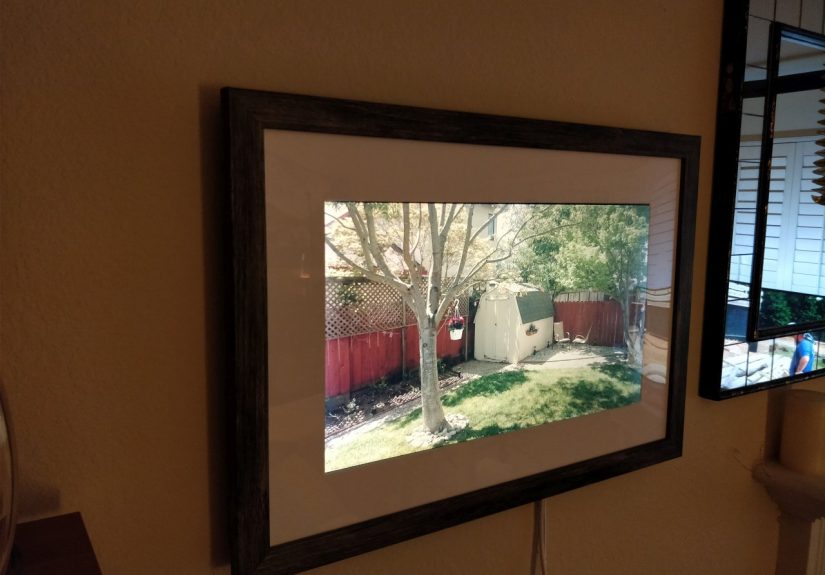
In the original maker spirit, one impressive version used a Raspberry Pi 3, an old 24-inch 1080p monitor, a handmade distressed wood frame, Google Photos queries, and even a color sensor to adjust the image’s color temperature to the room. That last touch matters. A digital frame should not glow like a miniature airport billboard during dinner. It should blend into the room like a real framed photo.
Why Digital Photo Frames Became Interesting Again
Digital photo frames were once the official gift of “I didn’t know what to buy Dad.” Many early models had low-resolution screens, awkward buttons, poor viewing angles, and software that felt allergic to joy. They technically displayed photos, but so did your refrigerator if you used enough magnets.
Modern digital picture frames are different. Better screens, Wi-Fi connectivity, app-based sharing, cloud albums, motion sensors, auto-dimming, touch controls, and remote uploads have made them genuinely useful. Families can send photos to grandparents from another state. Parents can preload a frame before gifting it. Travelers can keep a living slideshow of recent adventures. Photographers can use larger frames as casual rotating portfolios.
The biggest upgrade is not resolution, although crisp screens help. The biggest upgrade is convenience. A digital frame becomes valuable when it reduces the distance between taking a photo and enjoying it. That is exactly where the shoot-and-forget approach shines.
How the Shoot-And-Forget System Works
A shoot-and-forget digital photo frame usually has five moving parts: capture, sync, selection, display, and maintenance. When all five work smoothly, the experience feels almost magical. When one breaks, you suddenly become unpaid tech support at Thanksgiving.
1. Capture
Most photos now begin on a smartphone. That is useful because phones already organize images by date, location, face, album, and sometimes subject. A smart frame can take advantage of this metadata instead of forcing users to sort everything manually.
2. Sync
Photos must travel from the phone to somewhere the frame can access. That may be a cloud service, a brand’s app, an email address assigned to the frame, a shared album, or a local server. Cloud syncing is the easiest for most households, while local syncing is better for privacy-minded users who enjoy tinkering.
3. Selection
This is the secret sauce. A shoot-and-forget frame should not show every image. It should show the right images. Smart albums can filter by people, favorites, dates, keywords, or manually approved folders. Without selection, the frame may proudly display screenshots, receipts, memes, and the accidental photo you took while trying to turn off your alarm.
4. Display
The frame then presents images in a slideshow or static rotation. Good display software handles aspect ratio, brightness, orientation, color, and transition timing. Better systems also avoid cropping heads, over-brightening faces, or turning portrait photos into postage stamps surrounded by empty space.
5. Maintenance
Maintenance should be boring. That is a compliment. The frame should update automatically, reconnect after Wi-Fi hiccups, sleep at night, and avoid requiring weekly babysitting. A truly good digital photo frame should not need more attention than a houseplant. Ideally, less, because houseplants can be dramatic.
DIY vs. Buying a Smart Digital Frame
There are two main paths: build your own or buy a ready-made smart frame. Both can work beautifully, but they suit different personalities.
The DIY Raspberry Pi Route
A Raspberry Pi digital photo frame offers maximum control. You can reuse an old monitor, choose your frame size, build a wooden enclosure, connect to Google Photos or self-hosted photo libraries, and customize slideshow behavior. Advanced builders can add sensors for brightness, color temperature, motion detection, or automatic power control.
The DIY route is excellent for people who enjoy solving small puzzles. Want the frame to pull only photos tagged with “family” and “vacation”? Possible. Want it to turn off when nobody is in the room? Add a sensor. Want it to use a local folder instead of a cloud account? Do it. Want the whole thing to look like rustic farmhouse decor instead of a monitor wearing a Halloween costume? Build the frame carefully.
The downside is maintenance. Raspberry Pi projects can be stable, but they still require software updates, power management, Wi-Fi troubleshooting, and the occasional “why is the screen black?” investigation. DIY is rewarding, but it is not always Grandma-proof unless the builder does careful setup.
The Ready-Made Smart Frame Route
Commercial smart frames are built for ease. Aura frames emphasize polished app sharing, automatic updates, color-calibrated displays, no subscription requirement for core storage, and simple gifting. Skylight focuses heavily on simple setup, email or app uploads, touchscreen controls, and family-friendly sharing. Nixplay, Pix-Star, Frameo-powered frames, PhotoSpring, Pexar, and other models compete around screen quality, storage, app features, cloud support, offline options, and price.
Buying a frame makes sense when the recipient is not interested in tinkering. A well-designed consumer frame can be opened, connected to Wi-Fi, paired to an app, and filled with photos quickly. That matters for grandparents, busy parents, or anyone who sees “SSH into the Pi” and immediately needs a snack.
The downside is ecosystem dependence. Some frames rely heavily on company servers. Some features may require subscriptions. Some models offer limited offline use. Others support SD cards or USB drives but have weaker apps. The right choice depends on whether you prioritize convenience, privacy, screen quality, budget, or long-term independence.
Key Features That Matter Most
Automatic Photo Sync
Automatic photo sync is the heart of the shoot-and-forget experience. Look for frames that support shared albums, cloud album integration, app uploads, or email uploads. Google Photos and iCloud support can be especially useful, but platform changes can affect how those integrations work. That is why a frame with multiple upload methods is often safer than one that depends on a single service.
Screen Quality
A digital frame lives or dies by its screen. Resolution matters, but so do brightness, contrast, color accuracy, viewing angle, anti-glare coating, and aspect ratio. A 10- to 15-inch screen is usually ideal for most homes. Smaller frames work well on desks and bedside tables. Larger frames feel more like wall art, especially in living rooms or hallways.
For smartphone photos, a 4:3 or flexible orientation display can feel more natural than a strict widescreen frame. Landscape-only frames may look elegant, but they can make portrait photos feel cramped. If your camera roll is mostly vertical pictures of people, pets, and children, orientation support matters.
Remote Sharing
Remote sharing is what turns a frame into a family communication tool. A parent can send a first-day-of-school photo to a grandparent. A traveler can update a frame from another country. Multiple family members can contribute to the same frame, creating a shared memory stream.
This is also where permissions matter. The frame owner should control who can add photos. A good system makes sharing easy without turning the living room wall into an unmoderated group chat with transitions.
Privacy and Security
Because smart frames often handle personal family photos, privacy cannot be treated as decoration. Check where photos are stored, whether uploads are encrypted, who can access albums, whether the company uses cloud servers, and whether local storage is available. Some platforms advertise end-to-end encryption for app-to-frame transfers. Others store selected photos on cloud servers to enable syncing and unlimited storage.
Neither approach is automatically good or bad. Cloud storage is convenient, especially for remote sharing. Local storage gives more control. The best option depends on your comfort level, the sensitivity of your photos, and whether you trust the company’s long-term support.
No Surprise Subscription Traps
Some digital frames include the essentials for free but charge for extras like video playback, captions, albums, remote management, or expanded cloud tools. That does not make them bad products, but buyers should know the real cost before gifting one. A frame that seems cheap can become less charming if the best features are hiding behind an annual fee wearing a tiny mustache.
Best Use Cases for a Shoot-And-Forget Digital Photo Frame
For Families
Families take thousands of photos but rarely enjoy them. A shoot-and-forget frame turns the best images into everyday background joy. Instead of photos living only in a phone, they become part of the home. Kids see memories from trips, birthdays, messy pancake mornings, and backyard adventures. Parents get a rotating reminder that life is not just calendars, laundry, and wondering who finished the orange juice.
For Grandparents
This may be the perfect category. A preloaded smart frame lets relatives send new photos without requiring grandparents to manage apps, downloads, or social media. The frame simply updates. For long-distance families, that can feel more personal than a text message and less chaotic than a group chat with 114 unread notifications.
For Photographers
Photographers can use a digital frame as a rotating mini-gallery. A carefully curated album can show seasonal work, portraits, travel images, or black-and-white favorites. Higher-resolution frames with accurate color and matte screens are worth considering for this use case.
For Home Decor
A digital frame can also act as flexible decor. Show family photos during the week, travel landscapes during dinner parties, holiday images in December, or calming art when you want the house to pretend it is more organized than it is.
Common Problems and How to Avoid Them
Problem: Too Many Bad Photos
The frame is only as good as the album feeding it. Use favorites, shared albums, face filters, or manually approved folders. Do not connect your entire camera roll unless you enjoy living dangerously.
Problem: Awkward Cropping
Choose a frame that handles both portrait and landscape images well. Test a few vertical photos before committing. If heads are being chopped off, adjust crop settings or use a different album ratio.
Problem: Wi-Fi Dependence
Cloud frames need stable Wi-Fi. If the frame is for someone with unreliable internet, consider a model with internal storage, USB, SD card support, or local caching.
Problem: Privacy Anxiety
Create a dedicated album only for frame-safe photos. Avoid syncing screenshots, documents, private images, or anything you would not want appearing during a dinner party. Treat the frame like a wall, not a vault.
Problem: Tech Support Fatigue
For gifts, choose simplicity over feature overload. Preload photos, write down setup details, invite trusted contributors, and keep the number of moving parts low. The best frame is the one the recipient actually uses.
Buying Checklist: What to Look For
Before buying a shoot-and-forget digital photo frame, look for Wi-Fi connectivity, easy app setup, cloud or album syncing, strong screen quality, orientation flexibility, remote sharing, clear privacy policies, and no confusing subscription requirements. A motion sensor or auto-dimming feature is a major bonus because it helps the frame behave like home decor instead of a tiny television that refuses to sleep.
Also consider the recipient. A tech-savvy user may appreciate customization, local storage, and advanced album control. A grandparent may prefer a frame that receives photos by email or a dead-simple app. A design-focused homeowner may care most about bezel style, matting, wall mounting, and whether the frame looks like it belongs near actual furniture.
The Future of Shoot-And-Forget Frames
The future of digital photo frames is moving toward smarter curation, better displays, and less visible technology. E-paper frames are already making digital photos look more like printed images, with lower power use and a calmer presence. AI-assisted sorting may help choose better photos, remove duplicates, avoid blurry shots, and group moments by people or events. Smart home integration may let frames adjust based on time of day, room lighting, or household routines.
At the same time, privacy expectations will rise. People want convenience, but they also want control. The winning products will make sharing effortless while being transparent about storage, encryption, permissions, and long-term support. The best shoot-and-forget frame will not simply show more photos. It will show better photos with less effort and fewer worries.
of Real-World Experience: Living With a Shoot-And-Forget Digital Photo Frame
The first thing you notice after using a shoot-and-forget digital photo frame is how many photos you forgot you loved. Not the perfect ones. Not the professionally edited vacation hero shots. The little ones. A dog sleeping with one ear flipped inside out. A kid holding a sandwich like it is a legal document. A blurry-but-happy birthday candle moment. These are the photos that usually vanish into the camera roll swamp. On a frame, they come back to life.
The best experience starts with restraint. The temptation is to connect everything and let the slideshow rip. Do not do that unless your camera roll is unusually well-behaved. Most people need a dedicated album called something like “Frame Favorites.” Add photos manually for the first week, then gradually automate with favorites, people filters, or shared albums. This keeps the frame charming instead of chaotic.
Placement matters more than expected. A frame on a kitchen counter gets noticed during coffee, breakfast, and snack raids. A frame in a hallway becomes a pleasant surprise. A frame beside the TV may be ignored because the TV is louder and has dragons, football, or cooking competitions. For wall-mounted frames, eye level is ideal. For desk frames, avoid direct sunlight unless the display handles glare well.
Another lesson: transition speed changes the mood. Fast slideshows feel like a sales presentation from someone who drank too much espresso. Slow transitions feel more natural. A photo should stay long enough for someone to notice it, smile, and maybe say, “Wait, when was that?” That is the magic moment. The frame becomes a conversation starter, not just a screen.
For families, remote sharing is the killer feature. When relatives can add new photos, the frame becomes a quiet social network without arguments, ads, or someone posting a blurry meme from 2012. But set boundaries. Only invite people who understand the assignment. A digital frame should not become a prank delivery system.
Privacy habits are important. Keep sensitive photos out of synced albums. Review shared contributors occasionally. If gifting a frame, explain exactly who can send photos and how to remove unwanted ones. The device may be simple, but it still displays personal memories in a public room.
The final experience is surprisingly emotional. Printed photos are wonderful, but they freeze one moment. A shoot-and-forget frame keeps rotating through seasons of life. It reminds you that ordinary days are worth seeing again. It turns the phone’s endless archive into something warm, visible, and shared. And yes, it may occasionally show twelve photos of the same cat. That is not a bug. That is household morale.
Conclusion
A shoot-and-forget digital photo frame is more than a screen in a decorative border. It is a smarter way to rescue memories from digital storage and bring them back into daily life. The best versions combine automatic syncing, thoughtful curation, strong display quality, privacy controls, and simple sharing. DIY builders can create powerful Raspberry Pi-based frames with custom automation, while ready-made smart frames offer polished convenience for families, grandparents, photographers, and anyone tired of letting great photos gather digital dust.
The real value is not technical wizardry. It is emotional usefulness. A great frame makes memories visible without asking you to manage them constantly. You shoot. It displays. You smile. That is the whole point.
Note: This article is written for general consumer-tech education and web publishing. Product features, subscriptions, integrations, and cloud policies can change, so readers should check current manufacturer details before purchasing or building a frame.