Table of Contents >> Show >> Hide
- What Is Step Aerobics?
- Why Step Aerobics Still Deserves a Spot in Your Workout Plan
- Muscles Worked in Step Aerobics
- Best Beginner Step Aerobics Moves to Learn First
- A Simple 20-Minute Beginner Step Aerobics Workout
- Step Aerobics Tips for Better Form and Fewer Rookie Mistakes
- Who Should Try Step Aerobics?
- Common Beginner Mistakes in Step Aerobics
- Real-World Experiences With Step Aerobics: What It Often Feels Like
- Conclusion
Step aerobics is the fitness version of turning a staircase into a dance floor. It blends rhythmic cardio, lower-body strength, coordination, and just enough choreography to keep your brain awake and your legs politely questioning your life choices. If you have ever looked at a step platform and thought, “That little bench seems harmless,” step aerobics is here to remind you that appearances can be wildly misleading.
Still, that is exactly why this workout has lasted. Step aerobics is simple to start, easy to scale, and adaptable for beginners, regular exercisers, and anyone who wants cardio without needing a giant machine that looks like it belongs in a spaceship. At its core, step aerobics is repetitive stepping up and down on a raised platform, often combined with arm movements, directional changes, and music-driven timing. Depending on the pace, platform height, and choreography, it can feel like a brisk, steady workout or a full-on sweat festival.
The best part is that step aerobics checks a lot of fitness boxes at once. It can help improve cardiovascular endurance, strengthen the legs and glutes, support weight management, challenge balance and coordination, and add variety to a routine that has been getting suspiciously too friendly with the treadmill. Let’s break down what step aerobics is, why it works, the best moves to learn first, and how to do it without turning your knees into grumpy critics.
What Is Step Aerobics?
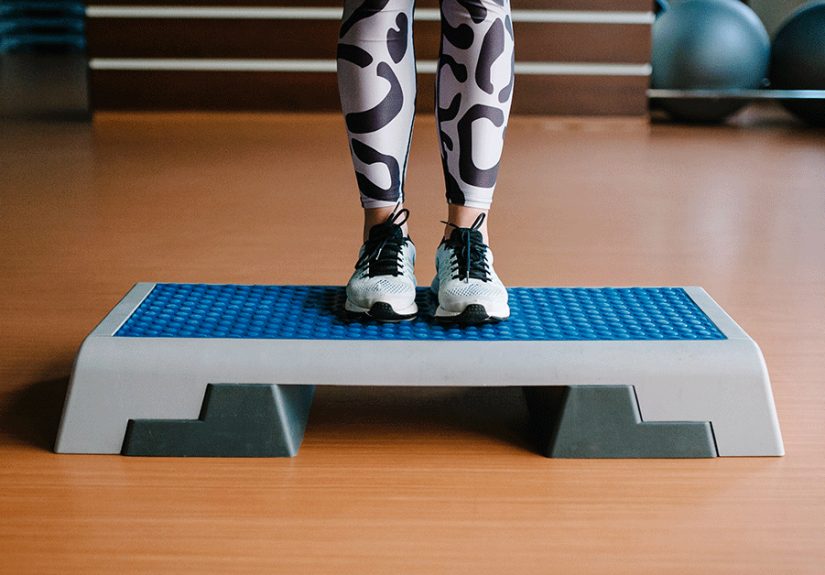
Step aerobics is a form of aerobic exercise built around stepping on and off a raised platform in repeated patterns. It became wildly popular because it offered a lively cardio workout that felt athletic, musical, and accessible at the same time. In a typical class or home workout, you follow a sequence of moves such as basic steps, knee lifts, hamstring curls, side steps, and V-steps. Some routines stay simple and beginner-friendly. Others add turns, tempo changes, and arm patterns that make you feel like a backup dancer who accidentally wandered into a cardio studio.
What makes step aerobics stand out is its versatility. You can keep it low impact with controlled stepping and no jumping, or make it more demanding by increasing the pace, adding arm work, using a higher platform, or extending the workout. Because it is rhythmic and repetitive, step aerobics fits neatly into cardio training. Because you are repeatedly pushing your body weight up onto a platform, it also asks more from your lower body than a standard walk around the block.
Why Step Aerobics Still Deserves a Spot in Your Workout Plan
1. It delivers real cardiovascular benefits
Step aerobics is cardio, plain and sweaty. Done at a moderate or vigorous intensity, it raises your heart rate, challenges your breathing, and can help you build cardiorespiratory fitness. That matters because regular aerobic activity supports heart and lung health, helps improve endurance, and is linked with a lower risk of many chronic conditions. In practical terms, climbing up and down to a beat is not just fun nostalgia from the neon-workout era. It is legitimate exercise.
2. It strengthens the lower body while you move
Unlike some forms of cardio that are mostly about endurance, step aerobics asks your muscles to push, stabilize, and control each landing. Your quadriceps, glutes, calves, and hamstrings all get involved. Add strong arm swings and a braced core, and the workout becomes even more full-body. It is not the same as a dedicated strength training session, but it absolutely helps build muscular endurance and leg stamina.
3. It can support balance and coordination
Every time you step up, step down, change directions, or add an arm pattern, your brain is working too. You are not just exercising your legs; you are training timing, rhythm, and body awareness. This mind-body element is one reason people often stick with step aerobics longer than they stick with repetitive cardio machines. There is enough variety to keep boredom from barging in uninvited.
4. It is weight-bearing, which is good news for your bones
Because step aerobics keeps you on your feet and moving against gravity, it falls into the broad category of weight-bearing exercise. That matters for bone health. While no one exercise is a magical skeleton potion, regular weight-bearing movement is part of a smart long-term strategy for maintaining strong bones, especially when paired with strength training and good nutrition.
5. It may help with mood, stress, and energy
Cardio tends to do nice things for the mind, and step aerobics adds a layer of music and momentum that many people find energizing. There is something deeply satisfying about matching movement to rhythm. Even when you mess up the combo and improvise with the confidence of a confused flamingo, you are still moving. That counts. Regular physical activity is associated with better mood, lower stress, improved sleep, and less day-to-day mental fog.
6. It is adaptable for different fitness levels
Beginners can use a low platform, simple patterns, and shorter sessions. More advanced exercisers can increase the height, tempo, complexity, or workout length. You can do step aerobics in a group class, through an online workout, or in your living room with a sturdy platform and enough floor space to avoid introducing your shin to the coffee table.
Muscles Worked in Step Aerobics
Step aerobics primarily targets the lower body, but it can involve much more than your legs if you move with intention. The main muscles used include:
- Quadriceps: These power the stepping motion and help straighten the knee.
- Glutes: Your glute muscles help drive you upward and stabilize your hips.
- Hamstrings: They assist with hip movement and help control the descent.
- Calves: These support ankle stability and help absorb and produce force.
- Core: A steady trunk helps with balance, posture, and safer stepping.
- Shoulders and arms: If you add arm patterns, your upper body joins the party too.
That combination is part of the appeal. Step aerobics does not just make you breathe hard. It also trains your body to coordinate effort from the ground up.
Best Beginner Step Aerobics Moves to Learn First
If you are new to step aerobics, resist the urge to start with complicated choreography that looks like a dance audition crossed with a geometry test. Begin with the classics.
Basic Step
Step up with one foot, bring the other foot up, then step down one foot at a time. Switch your lead leg regularly. This is the bread-and-butter move of step aerobics and the best place to learn rhythm, posture, and platform awareness.
V-Step
Step wide onto the platform, one foot to each front corner, then step back down with the feet returning closer together. The wide stance changes the feel in the hips and thighs and adds variety without too much complexity.
Knee Lift
Step up, then lift the opposite knee before stepping down. This move adds balance and core demand. It also gives your basic step a little more personality.
Hamstring Curl
Step up, then bring the heel of the free leg toward your glutes before stepping down. It is simple, rhythmic, and easier for many beginners than a knee lift.
Tap-Up or Toe Tap
Step onto the platform with one foot and tap the other foot on top without fully shifting weight. This is a nice lower-intensity option and a good transition move during recovery segments.
Side Step
Approach the platform from the side, step up sideways, then step down the same way. Side-oriented moves challenge the hips differently and help break up the front-facing pattern.
Repeater Knee
Step up and drive the same knee upward repeatedly for two or three counts before stepping down. This one adds intensity quickly, so save it for when your form stays solid and your lungs are not filing a formal complaint.
A Simple 20-Minute Beginner Step Aerobics Workout
Warm-Up: 5 Minutes
March in place, side step, tap the platform, and gradually begin basic stepping. Keep the movement light and controlled. The goal is to raise your heart rate slowly and prepare the joints and muscles for faster work.
Main Set: 12 Minutes
Do each move for about one minute, then cycle through again:
- Basic step
- V-step
- Knee lift
- Hamstring curl
- Side step
- Tap-up recovery round
After one full round, repeat the sequence. Once the pattern feels familiar, add light arm movements or a slightly quicker tempo.
Cool-Down: 3 Minutes
Slow to a march, reduce the range of movement, and finish with gentle stretches for the calves, hamstrings, quadriceps, and hips.
Step Aerobics Tips for Better Form and Fewer Rookie Mistakes
Use the whole foot on the platform
Do not perch on the edge of the step like a nervous pigeon. Place your whole foot on the platform. That gives you better stability and helps reduce unnecessary strain on the knees and ankles.
Keep your knee aligned over your toes
As you step up, aim to keep the working knee tracking in line with the toes rather than collapsing inward. Good alignment is one of the simplest ways to clean up your technique and improve comfort.
Start with a lower platform
Bigger is not automatically better. A lower step is often the smartest choice for beginners because it lets you learn movement patterns and build fitness without overloading your joints. You can always level up later when your control, stamina, and confidence improve.
Keep your posture tall
Try not to hunch over the platform like you are decoding an ancient fitness scroll. Keep the chest lifted, shoulders relaxed, and core gently engaged. A tall posture helps balance and makes the movement more efficient.
Watch your intensity
Step aerobics can sneak up on you. One minute you are smiling at the music, and the next your lungs are conducting an emergency staff meeting. Use the talk test to monitor effort. For moderate intensity, you should be able to talk but not sing. If you can only spit out a few dramatic syllables, you are probably pushing into vigorous territory.
Warm up and cool down every time
Yes, every time. Skipping the warm-up because you are “already motivated” is how workouts start with false confidence and end with regret. Ease in, ease out, and give your body a smoother transition in both directions.
Wear supportive shoes and use a stable platform
Your shoes should provide good support, and the step should be sturdy, flat, and non-slip. This is not the place for mystery furniture, wobbly stools, or an ottoman with ambition.
Modify if you have joint concerns
If your knees, ankles, hips, or lower back tend to complain, keep the step low, reduce twisting, avoid jumping, and shorten the session. If you have a medical condition, a recent injury, or significant balance issues, get personalized guidance before diving in.
Who Should Try Step Aerobics?
Step aerobics is a great option for people who want cardio with structure, rhythm, and a bit more lower-body challenge than walking. It can work well for home exercisers, group fitness fans, and former athletes who miss movement patterns that feel dynamic without necessarily requiring sprinting or high-impact drills.
It may not be ideal for everyone, though. People with untreated injuries, significant balance limitations, or pain that worsens with stepping should be cautious. That does not mean the workout is off-limits forever. It just means the starting point may need to be gentler, simpler, or guided by a qualified professional.
Common Beginner Mistakes in Step Aerobics
- Going too fast before mastering the pattern.
- Using a platform that is too high.
- Landing heavily instead of stepping softly.
- Looking down nonstop and losing posture.
- Ignoring fatigue and letting form fall apart.
- Treating every session like a championship final.
Form first, flair second. The jazz hands can wait.
Real-World Experiences With Step Aerobics: What It Often Feels Like
One of the most interesting things about step aerobics is that the experience changes fast. The first class or first home session often feels humbling. Not because the workout is impossible, but because rhythm, coordination, and timing have a way of exposing your overconfidence with surgical precision. Many beginners go in expecting “just stepping.” Then the instructor adds a knee lift, a side change, a turn, and suddenly everyone else looks smooth while you are negotiating with your left foot like it is a difficult coworker. That awkward stage is normal.
After a handful of sessions, something shifts. The platform stops feeling like a puzzle and starts feeling like a tool. The body learns the patterns. The brain stops panicking. Breathing becomes more controlled, transitions get cleaner, and you realize you are not just surviving the workout anymore. You are actually moving with it. That is usually when people begin to enjoy step aerobics rather than merely respect it from a safe emotional distance.
Many people also notice that step aerobics feels different from other cardio options. A treadmill can be useful, but it often asks for mental endurance as much as physical endurance. Step aerobics tends to keep the mind busier. You are listening, adjusting, reacting, and moving with rhythm. That can make the session feel shorter, even when you are working hard. It is cardio with a built-in distraction, and honestly, that is a beautiful thing.
Physically, beginners often report feeling the workout most in the thighs, glutes, calves, and lungs. The next day can bring a very specific kind of soreness, the kind that politely reminds you every time you sit down that your lower body was absolutely invited to the event. As technique improves, though, many people find the workout starts to feel smoother and less jarring. Stepping softly, using the full foot, and keeping good alignment can make a huge difference in comfort.
There is also a confidence factor that sneaks in over time. Step aerobics is satisfying because progress is easy to notice. You can see when your coordination improves. You can feel when your recovery between sequences gets better. You can tell when the same routine that once had you gasping now feels manageable. Those visible wins matter. They help people stay motivated, especially if they are bored by exercise that feels repetitive or disconnected from progress.
For home exercisers, step aerobics can become a practical favorite because it does not require a massive footprint or expensive setup. A sturdy platform, decent shoes, and enough room to move safely are usually enough. Some people like following online videos. Others build their own mini routines with basic steps, knee lifts, hamstring curls, and short intervals. The beauty of the format is that it can be simple or more elaborate depending on your mood, fitness level, and patience for choreography on any given day.
Group class fans often describe another benefit: energy. Music, shared rhythm, and the collective effort of a room full of people trying to keep up with the same beat can make the workout feel surprisingly social. Even if you miss a sequence, the class keeps moving. There is freedom in that. You do not have to be perfect to get a great workout. You just have to keep stepping.
In the long run, the people who tend to stick with step aerobics are usually the ones who stop worrying about looking polished and focus instead on feeling stronger, fitter, and more coordinated. That mindset matters. Step aerobics is not a performance. It is a workout. If your form is solid, your pace matches your fitness, and your body feels challenged in a good way, you are doing it right. Fancy choreography is optional. Consistency is the real star.
Conclusion
Step aerobics has stuck around for a reason. It is efficient, engaging, scalable, and surprisingly effective. It can improve cardiovascular fitness, strengthen the lower body, challenge coordination, support bone health, and make exercise feel less like a chore and more like an event. Start simple, keep the platform height sensible, use clean stepping mechanics, and let your intensity build over time. In other words, do not try to become the emperor of choreography on day one. Step up, learn the basics, and let the benefits stack one beat at a time.