Table of Contents >> Show >> Hide
If a lot of luxury design studios shout, “Look at me!”, Studio Tim Campbell tends to do something smarter: it adjusts its cufflinks, opens the front door, and lets the architecture do the talking. That quiet confidence is a big part of what has made the firm stand out. Based in Los Angeles and New York, Studio Tim Campbell has built a reputation around custom residential design, historical renovation, interior design, and hospitality work that feels polished without becoming cold, glamorous without becoming goofy, and refined without smelling faintly of design-school panic.
At its core, Studio Tim Campbell is not just about making beautiful rooms. Plenty of people can buy an expensive chair and place it under a moody light fixture. The harder trick is creating spaces that feel layered, intentional, and deeply connected to the building’s history. That is where the studio’s identity gets interesting. Again and again, its work returns to one central idea: a building should not lose its soul just because somebody with a healthy renovation budget has arrived.
What Is Studio Tim Campbell?
Studio Tim Campbell is a bi-coastal architecture and interior design practice founded by Tim Campbell in 2006. The firm’s portfolio spans high-end residential projects, specialty commercial spaces, and hospitality design, with work that ranges from ground-up homes to historically sensitive restorations. Over time, the practice expanded beyond architecture into interior and furniture design, which helps explain why many of its projects feel unusually cohesive. The walls, materials, furnishings, and mood usually seem to be having the same conversation instead of arguing across the room like relatives at Thanksgiving.
That full-service approach is a major part of the studio’s appeal. Rather than treating architecture, interiors, and design detailing as separate departments with separate personalities, Studio Tim Campbell tends to treat them as one connected experience. This matters because clients do not actually live in floor plans. They live in textures, light, circulation, storage, views, and all the tiny details that determine whether a home feels elegant or just expensive. The studio’s process appears to understand that difference very well.
The Story Behind the Studio
Like many good design stories, this one starts earlier than the official launch date. Before founding the studio that now bears his name, Tim Campbell was already deeply involved in the design and documentation side of the business. His earlier professional work in drafting, project management, and production helped build a practical foundation that many pure aesthetes never quite develop. In other words, this was not a case of someone waking up one morning, buying a black turtleneck, and declaring himself a design visionary by lunchtime.
The eventual shift into a full-service studio reportedly grew out of Campbell’s increasing leadership on projects and the experience of designing his own home in Silver Lake. That house seems to have functioned as both a personal statement and a professional pivot. From there, Studio Tim Campbell evolved into a practice that could handle the full arc of a project, from concept to construction administration, while also shaping the atmosphere inside the finished space. An interior design and furniture design division followed, and a New York office later reinforced the firm’s bi-coastal identity.
Studio Tim Campbell’s Design Philosophy
If you had to boil the firm’s philosophy down to one sentence, it would be this: every building has a character worth respecting. That sounds simple, but it carries real weight. In an era when too many renovations bulldoze nuance in the name of freshness, Studio Tim Campbell’s approach feels more edited and more mature. The goal is not to flatten a place into trend-friendly sameness. The goal is to identify what already matters and then make it function beautifully for contemporary life.
That philosophy is especially important in historical restoration. Old homes are like glamorous older movie stars: they can absolutely handle a little work, but they should not come out looking unrecognizable. Studio Tim Campbell has earned attention for restoration and renovation projects that aim to preserve architectural integrity while improving comfort, livability, and flow. The result is often a delicate balance between reverence and reinvention. Original detailing is respected, but the interior life of the building is not trapped in amber.
The studio’s aesthetic is also shaped by art, travel, fashion, and contemporary culture. That broader range of influences shows up in the finished work. Many projects associated with Studio Tim Campbell feel clean and modern, yet not minimal in a sterile sense. There is usually warmth in the materials, drama in the proportions, and a sense that the space has been composed rather than merely decorated. It is luxury with some intelligence behind the cheekbones.
Notable Projects That Define the Brand
One of the most frequently cited examples of the studio’s design sensibility is its work connected to Richard Neutra’s Singleton House. That project has become an important calling card because it captures so many elements of the studio’s broader reputation: respect for architectural history, careful restoration, and a willingness to make a significant house feel alive again instead of overly precious. When a studio can touch a modernist property tied to a celebrated architect and avoid making design lovers faint into their espresso, that counts as a win.
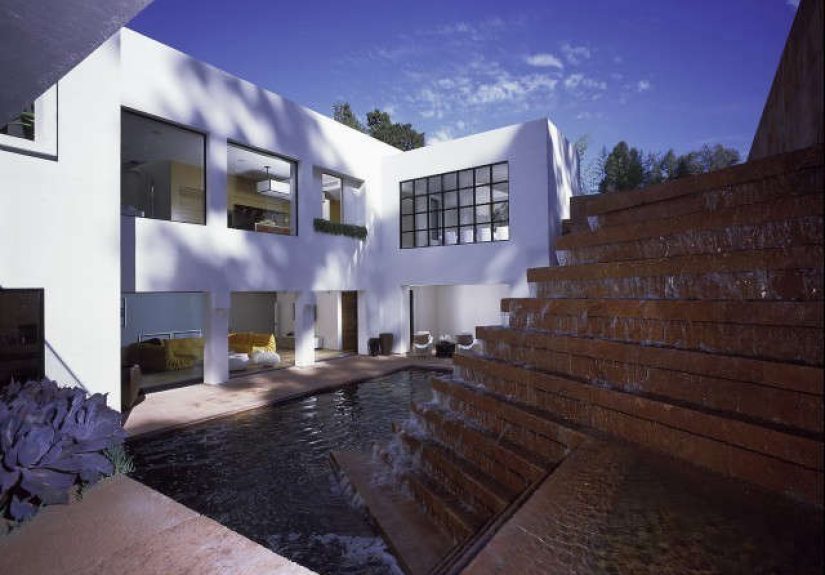
Other notable projects associated with the firm include restoration and renovation work involving the Alfred Newman Residence by Lloyd Wright, an estate remodel featuring Luis Barragán’s Campbell Divertimento Fountain, and work on the Colony Palms Hotel in Palm Springs. Together, these examples show that Studio Tim Campbell is not limited to one style, one decade, or one client type. The studio moves between modernist homes, traditional residences, boutique hospitality, and custom environments with a confidence that suggests deep experience rather than lucky improvisation.
The firm has also been recognized for residential work in Beverly Hills and beyond, including an award-winning façade remodel for Diane Keaton. That kind of project matters because it illustrates how the studio operates at several scales at once. It can think about preservation, curb appeal, construction, and atmosphere all within the same assignment. Good design firms can make a room look wonderful in photos. Great ones understand how the entire property tells a story from the front gate onward.
Why the Design World Pays Attention
Studio Tim Campbell has drawn notice not only because the work is attractive, but because it occupies a sweet spot that is surprisingly rare. The firm’s projects feel luxurious enough for shelter magazines, grounded enough for serious architecture conversations, and personal enough to avoid looking like they were assembled by a team of high-end robots. That flexibility helps explain why the studio has appeared across design media, interviews, property features, and publishing.
A major milestone in the studio’s public profile was the release of Intentional Beauty, Tim Campbell’s monograph. The book surveys roughly twenty-five years of work and highlights a range of restoration, renovation, and design projects in Los Angeles and New York. More importantly, the title itself captures the studio’s appeal. “Intentional” is the operative word. Nothing about the best Studio Tim Campbell spaces feels accidental. The materials, views, furnishings, and circulation tend to read as part of a bigger point of view.
Media profiles have also emphasized Campbell’s bi-coastal schedule, disciplined work habits, and fluency in both hand sketching and digital drafting. That combination of artistic instinct and technical process is worth noting. Some studios excel at presentation but stumble in execution. Others are brilliant at documentation but produce spaces with all the emotional warmth of a tax office. Studio Tim Campbell’s reputation suggests a more balanced model, one in which creativity and practicality are both invited to the party.
What Makes Studio Tim Campbell Distinct in a Crowded Market?
The luxury design world is crowded with firms promising timelessness, craftsmanship, and bespoke service. At this point, those words are practically decorative throw pillows. What gives Studio Tim Campbell a more distinct identity is the way its work seems to combine polish with narrative. The studio is not simply arranging surfaces; it is shaping how a building is understood and experienced.
That matters especially in cities like Los Angeles and New York, where architecture often carries cultural baggage, historical value, and very opinionated clients. A studio working in those environments needs to be diplomatic without becoming bland. It needs to know when to preserve, when to edit, and when to introduce something contemporary enough to keep the project from becoming a costume drama. Studio Tim Campbell appears to thrive in exactly that zone.
There is also a strong lifestyle component to the brand. The work does not just suggest wealth; it suggests a certain kind of cultivated living. Art matters. Materials matter. Travel matters. Light matters. The house is expected to perform well for daily life, but it is also expected to express taste, memory, and identity. In that sense, Studio Tim Campbell is not merely selling design. It is offering an atmosphere of considered living, which is much harder to copy than a sofa silhouette.
The Experience of a Studio Tim Campbell Space
To understand why Studio Tim Campbell resonates with design-minded audiences, it helps to think beyond square footage and style labels and focus on experience. What does a Studio Tim Campbell project actually feel like? Based on the firm’s body of work and the way it is described across profiles and project features, the answer seems to begin with arrival. You do not simply enter the home; you are gradually introduced to it. There is often a sense of pacing, as if the architecture understands that anticipation is part of pleasure. A driveway, a courtyard, a carefully edited façade, a view held back for a few beats longer than expected, and then the reveal. Good design knows how to make an entrance. Great design knows when not to rush it.
Inside, the experience tends to be one of composure rather than chaos. Materials work quietly but effectively: wood adds warmth, stone adds weight, glass opens the space, and textiles soften the sharper edges of architectural precision. Even when the rooms are large, the atmosphere rarely feels hollow. That is a surprisingly difficult trick. Plenty of luxury homes are technically impressive and emotionally vacant, like five-star hotels for people who have misplaced their personalities. Studio Tim Campbell projects often seem more grounded than that. They create visual drama without sacrificing intimacy.
Light plays a starring role in this experience. In homes linked to the studio’s modernist and restoration work, daylight is not just something that happens; it becomes part of the composition. It washes across surfaces, picks up the texture of plaster, deepens the grain of wood, and changes the mood of a room from morning to evening. That makes the house feel less static. You are not living inside a frozen magazine spread. You are living inside an environment that shifts throughout the day, which is one reason these interiors can feel both luxurious and human.
There is also an emotional intelligence to spaces shaped in this manner. A well-designed living room should not only look beautiful when nobody is using it. It should support conversation, retreat, entertaining, reading, and the quiet little rituals that make a home feel personal. The best Studio Tim Campbell-style environments seem to understand this. They leave room for art, memory, and character. They do not overwhelm the people living there. Instead, they make those people look like slightly more elegant versions of themselves, which is really what many clients want even if they never say it out loud.
Guests would probably notice something else too: the balance between restraint and seduction. Nothing feels random, yet nothing feels aggressively staged. A dramatic hallway might lead to a calm bedroom. A sculptural piece of furniture might sit inside a room whose architecture still gets the final word. Historical details are allowed to retain their dignity, while newer insertions keep the house from becoming a museum. That tension is where the experience becomes memorable. It is not nostalgia, and it is not trend-chasing. It is a dialogue between eras, edited with care.
Ultimately, the experience tied to Studio Tim Campbell is one of living with intention. You sense that the home has been thought through at every level, from movement and mood to materials and meaning. That kind of design does more than impress visitors for ten minutes. It changes how daily life feels. Morning coffee seems calmer. Evening entertaining feels smoother. Even the act of walking from one room to another has a certain rhythm. And that may be the real magic here: not flashy extravagance, but the subtle luxury of a place that feels complete.
Final Thoughts
Studio Tim Campbell has carved out a compelling place in American design by refusing easy categories. The firm is polished but not shallow, historically aware but not stuck in the past, and luxurious without relying on empty spectacle. Whether the project is a modernist restoration, a custom residence, a boutique hospitality property, or an interiors-driven renovation, the underlying message remains consistent: design should honor character, support modern living, and create beauty with purpose.
That is probably why the studio continues to attract attention. In a world full of homes designed to trend for five minutes and age like milk, Studio Tim Campbell offers something steadier. Its best work suggests that elegance is not about excess. It is about editing, proportion, memory, and intention. And frankly, that is a lot more interesting than another marble island trying to become an influencer.