Table of Contents >> Show >> Hide
- Hospice showed me that health care is bigger than treatment
- Presence is not a small thing. It is a clinical thing.
- Communication is not a soft skill. It is a care skill.
- Families are not visitors. They are part of the care unit.
- Comfort requires teamwork, not a lone hero
- Health care often confuses doing more with caring more
- Dignity lives in the details
- Access, timing, and trust shape the quality of care
- What hospice taught me about the future of health care
- My experience: the quiet education of hospice volunteering
- Conclusion
Before I became a hospice volunteer, I thought health care was mostly about action. Tests. Treatments. Charts. Beeping machines. People hurrying down hallways with expressions that suggested they had not sat down since the Clinton administration. I assumed the best care was the kind that looked busy.
Then I started volunteering in hospice, and the lesson arrived almost immediately: some of the most important things in health care do not look dramatic at all. They look like sitting in a chair. Listening without interrupting. Refilling a glass of water. Giving a family member permission to cry in the kitchen. Telling a patient, with your tone more than your words, “You are still a person, not a problem to be managed.”
Hospice changed the way I think about medicine, caregiving, dignity, and what “good care” actually means. It taught me that health care is not only about extending life. It is also about easing suffering, honoring choices, supporting families, and recognizing that people need more than procedures. They need presence. They need clarity. They need comfort. And, every now and then, they need someone to adjust the pillow without turning it into a five-act drama.
Hospice showed me that health care is bigger than treatment
One of the first things I learned as a hospice volunteer was that care and cure are not the same thing. In much of American health care, the spotlight naturally lands on fixing, reversing, stabilizing, and discharging. Hospice operates with a different question: if a person is living with a terminal illness, what will make this time more comfortable, more meaningful, and more humane?
That shift is enormous. It does not mean giving up. It means changing the goal. Instead of asking, “What more can we do to fight the disease?” hospice often asks, “What matters most to this person now?” Sometimes the answer is pain relief. Sometimes it is being at home. Sometimes it is hearing favorite music, seeing a grandchild, or simply not having to spend another evening in an emergency room under fluorescent lights that make everybody look like they lost a bet.
As a volunteer, I was not there to provide medical care. I was there to support the person and the family in ordinary, human ways. But that role taught me something profound: ordinary support is not extra. It is part of the care.
Presence is not a small thing. It is a clinical thing.
In hospice, I saw how much suffering comes not only from illness, but from fear, confusion, and isolation. A patient could have medications for pain and still feel terrible because nobody had answered the questions that kept circling in their mind. A family member could have a stack of discharge papers and still feel completely lost. A home could be medically equipped and emotionally overwhelmed at the same time.
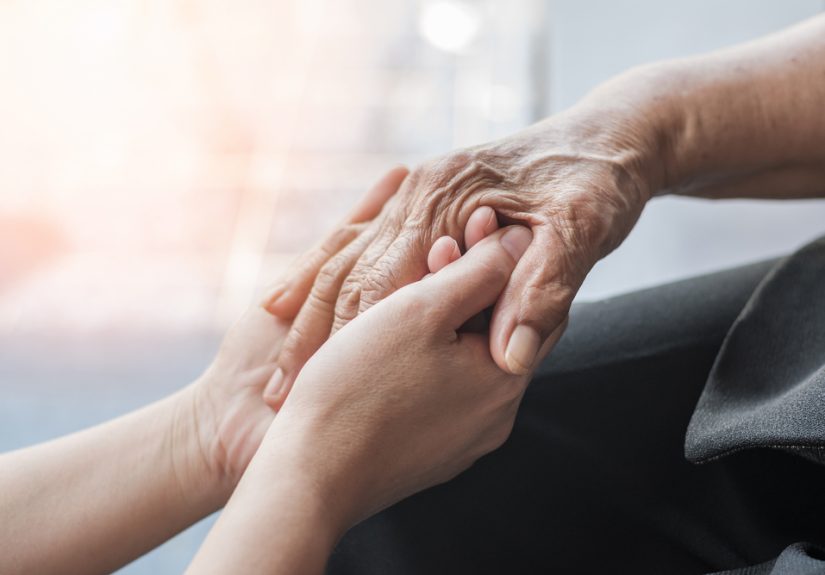
That is where hospice taught me one of its clearest lessons: presence matters. Not performative presence. Not the kind where someone says, “I’m here for you,” while glancing at a watch every thirty seconds. Real presence. Quiet attention. The kind that slows a room down.
When a volunteer sits with a patient so a spouse can shower, buy groceries, or take a short walk outside, that is not just kindness. It is support for the whole system around the patient. When someone listens to a life story for the fifth time as if it were the first, that is not inefficiency. It is dignity in action.
Health care systems love metrics, and to be fair, metrics have their place. But hospice made me appreciate what is harder to measure: the relief on a daughter’s face when someone finally explains what is happening in plain English; the comfort a patient feels when a room becomes less chaotic; the trust that grows when nobody rushes the conversation.
Communication is not a soft skill. It is a care skill.
If hospice taught me anything, it is that communication is not decorative. It is foundational. Families do better when they understand what to expect. Patients feel safer when someone tells the truth with compassion. Teams function better when goals are discussed clearly rather than guessed at from a hallway nod or a chart note that reads like it was written during turbulence.
American health care often struggles here. People hear “palliative care” and think it means surrender. They hear “hospice” and assume it means the last 24 hours of life. They avoid the conversation because the words feel heavy, unfamiliar, or frightening. By the time some families receive a hospice referral, they are exhausted, confused, and already knee-deep in crisis.
Hospice volunteering gave me a front-row seat to what happens when communication improves. The room changes. The family stops chasing ten competing interpretations. The patient’s preferences become clearer. The care plan starts to reflect a real human being rather than a generic medical script.
What good communication looked like
Good communication in hospice was rarely flashy. It sounded like nurses explaining symptoms without panic. Social workers helping families talk through practical decisions. Chaplains creating space for questions that were emotional or spiritual rather than medical. Volunteers reinforcing calm by not pretending to know everything and by not disappearing when the room got hard.
That taught me a broader lesson about health care: the best systems do not just deliver services. They help people understand their reality, their options, and their own goals.
Families are not visitors. They are part of the care unit.
Another lesson hospice made impossible to ignore is that illness does not happen to one person only. It ripples through the household. The spouse managing medications, the son coordinating appointments from another state, the daughter trying to be brave while googling medical terms at 2 a.m., the neighbor dropping off soup and pretending soup solves everything. Serious illness creates a team, whether that team feels ready or not.
Hospice, at its best, treats the family as part of the care unit. That idea changed how I see the entire health system. Too often, health care focuses narrowly on the patient while quietly assuming that family members will absorb the logistical and emotional impact. They will provide transportation, manage schedules, make decisions, monitor symptoms, wash laundry, answer relatives’ texts, and somehow remain calm. It is a heroic expectation and, frankly, a wildly unrealistic one.
As a volunteer, I saw that even an hour of relief could matter. If I sat with a patient while a caregiver stepped out, that was not a minor courtesy. It was a pressure valve. It was a chance for someone to breathe, cry privately, make phone calls, or simply drink coffee while it was still warm. Hospice taught me that caregiver support is not a side issue in health care. It is central.
Comfort requires teamwork, not a lone hero
Popular culture loves the heroic clinician who single-handedly saves the day. Hospice offered a more truthful picture: quality care usually comes from teams. Nurses, physicians, aides, social workers, chaplains, bereavement staff, volunteers, and family caregivers all contribute different forms of support. No one person carries all of it.
That team-based model taught me what many parts of health care still need to learn: patients are not neatly divided into medical, emotional, social, and spiritual categories. All of those dimensions overlap. Pain can be physical, but it can also be worsened by fear. Anxiety can come from uncertainty, but also from unmanaged symptoms. A practical problem, like not having help at home, can become a medical problem in a hurry.
Hospice teams are built around that reality. They do not pretend a symptom exists in isolation from a household, a schedule, or a set of values. As a volunteer, I learned that comprehensive care feels less like a dramatic intervention and more like coordinated common sense. Which, to be clear, is rarer than it should be.
Health care often confuses doing more with caring more
One of the toughest lessons hospice taught me is that health care can be excellent at extending processes while being less consistent at honoring priorities. The system is often designed to keep moving: another specialist, another admission, another test, another treatment discussion. Sometimes that momentum helps. Sometimes it simply sweeps people forward before anyone asks whether the next step matches the patient’s wishes.
Hospice challenged that reflex. It reminded me that more intervention is not automatically more compassion. In fact, truly patient-centered care may require the courage to stop, listen, and define success differently. Success may mean fewer burdensome transitions. It may mean better symptom control. It may mean being at home. It may mean a death that is less chaotic and more aligned with what the person actually wanted.
That is not a smaller vision of health care. It is a wiser one.
Dignity lives in the details
Before hospice, “dignity” sounded like one of those noble words people put in mission statements and then forget by lunchtime. Hospice made it concrete. Dignity was knocking before entering a room. It was asking permission before moving a blanket. It was speaking to the patient, not just around the patient. It was noticing fatigue and lowering the noise level. It was respecting rituals, routines, and preferences that might seem small to outsiders but meant everything inside that home.
Dignity was also letting people remain themselves. A patient was not reduced to a diagnosis. They were still the retired teacher who loved crossword puzzles, the church pianist with strong opinions about casserole quality, the grandfather who wanted baseball on in the background, the woman who still preferred lipstick because she liked to “look awake even when I’m not.”
Hospice volunteering taught me that health care becomes more humane when it resists flattening people into cases. The body matters, of course. But so does identity. So does memory. So does humor. Especially humor. It turns out people can be deeply ill and still appreciate a good joke, a familiar story, or a stubbornly terrible pun.
Access, timing, and trust shape the quality of care
Hospice also taught me that good care is not only about what services exist. It is about when people get them, whether they understand them, and whether they trust the system enough to accept them. Some families came to hospice with relief. Others came with fear, guilt, or suspicion because nobody had explained the service well earlier in the illness.
That opened my eyes to a larger problem in health care: access is not just a matter of availability. It is also a matter of language, culture, timing, transportation, health literacy, and trust. If people associate hospice with abandonment, they may arrive later than they otherwise would. If families have been excluded from decision-making or spoken to in jargon for months, they do not suddenly become confident because a brochure appears.
Hospice volunteering made me respect the importance of plain language and culturally responsive care. A health system can have excellent services on paper and still fail people if it does not communicate clearly or earn trust. That lesson applies far beyond end-of-life care.
What hospice taught me about the future of health care
By the time I had spent enough time volunteering in hospice, I no longer thought of health care as a contest between high-tech medicine and warm-hearted compassion. We need both. The real question is whether the system knows when each is needed and whether it can integrate them without losing the person at the center.
Hospice taught me that the future of better health care is not simply more innovation. It is better alignment. Better conversations. Earlier planning. Stronger support for caregivers. More respect for patient goals. More serious attention to comfort, quality of life, and the emotional realities of illness. In other words, better health care may look less like constant escalation and more like intelligent, coordinated, human-centered care.
That is not a lesson limited to dying patients. It applies to aging, chronic illness, disability, recovery, and caregiving across the board. Hospice may sit at one end of the care continuum, but the truths it reveals belong everywhere.
My experience: the quiet education of hospice volunteering
What I remember most from hospice volunteering is not one dramatic moment. It is the accumulation of small ones. A living room lamp turned on in the late afternoon. A family photo on a side table. A patient who wanted company but not conversation. A spouse who apologized for the mess when the house was clearly being held together by determination and paper towels. A nurse explaining a symptom so gently that the entire room seemed to exhale.
I remember arriving with the idea that I was there to help, only to realize I was also there to learn. I learned that silence can be generous. I learned that not every problem can be solved, but many can be softened. I learned that sitting with someone who is frightened is not nothing. It may be one of the most useful things a person can do.
There were days when I read aloud. Days when I listened to stories I had heard before and tried to honor them as if they were brand new. Days when my role was mostly to be a calm extra person in the room so a caregiver could step away and recover a sliver of energy. I saw how tired family caregivers were, and how often they felt they had to hold everything together. Hospice made visible the labor that health care systems sometimes assume families will just absorb.
I also saw how deeply people wanted honesty delivered with kindness. Not harshness. Not false reassurance. Just honesty that made room for emotion. Families did better when they understood what was happening. Patients seemed steadier when people spoke to them directly and respectfully. Confusion created fear; clarity created steadiness.
Some visits were surprisingly funny. Someone would crack a joke about hospital food, or oxygen tubing, or the endless parade of forms that follows a serious illness through American life like a determined administrative ghost. That humor was not denial. It was humanity. It reminded me that people do not stop being themselves when they become patients.
What changed in me most was my definition of good health care. I used to think quality lived mostly in expertise, speed, and intervention. Now I think it also lives in timing, listening, explanation, comfort, and respect. It lives in whether the patient’s goals shape the plan. It lives in whether the family has support. It lives in whether someone notices that the person in the bed is still a person with preferences, history, and a voice.
Hospice volunteering did not make me anti-medicine. It made me appreciate medicine more honestly. I saw how valuable skilled clinicians are, and how essential symptom management, coordination, and judgment can be. But I also saw that technical excellence alone is incomplete. Health care reaches its best form when expertise is paired with humility, when treatment is paired with conversation, and when efficiency does not crush tenderness.
If I had to sum up what being a hospice volunteer taught me about health care, it would be this: the system works best when it remembers what illness feels like from inside the home, not just inside the chart. Hospice brought me close to that reality. It taught me that care is not measured only by what we do to a disease, but by how we show up for a person. And that lesson, quiet as it is, may be one of the most important lessons health care has to offer.
Conclusion
Hospice volunteering taught me that great health care is not only about more medicine. It is about better care. It is about knowing when to treat, when to explain, when to comfort, and when to simply stay present. In a system often obsessed with speed and intervention, hospice insists on something radical and necessary: that people deserve dignity, clarity, teamwork, and compassion at every stage of illness. That lesson should not live only in hospice. It should shape all of health care.