Table of Contents >> Show >> Hide
- 1. Panettone Italy
- 2. Tamales Mexico and Latin America
- 3. Latkes Jewish Hanukkah Tradition
- 4. KFC Christmas Dinner Japan
- 5. Bibingka Philippines
- 6. Bûche de Noël France
- 7. Toshikoshi Soba Japan
- 8. Tangyuan or Yuanxiao China
- 9. Twelve Grapes Spain
- 10. Hoppin’ John Southern United States
- 11. Cotechino e Lenticchie Italy
- 12. Tourtière French Canada
- 13. Kransekake Norway and Scandinavia
- 14. Pavlova Australia and New Zealand
- 15. Sheer Khurma South Asia
- Why Holiday Foods Matter Across Cultures
- Experience Section: What It Feels Like to Explore 15 Unique Holiday Foods from Around the World
- Conclusion
- SEO Tags
Every holiday table tells a story. Sometimes that story says, “We survived another year.” Sometimes it says, “Grandma is in charge, and nobody touch the good serving spoon.” And sometimes it says, “Yes, we absolutely ordered fried chicken three months ahead because that is tradition.” Around the world, holiday foods are more than festive calories wearing a fancy hat. They are edible history, family identity, religious symbolism, seasonal comfort, andlet’s be honestan excellent reason to loosen a waistband.
From sweet rice cakes eaten after early morning Christmas Mass in the Philippines to lucky noodles slurped in Japan on New Year’s Eve, global holiday foods reveal how people celebrate hope, memory, faith, prosperity, and togetherness. Some dishes are ancient. Some are modern marketing miracles. Some require days of planning, while others require the heroic ability to eat twelve grapes before the clock finishes striking midnight.
This guide explores 15 unique holiday foods from around the world, including Christmas dishes, New Year’s foods, Hanukkah classics, Lunar New Year treats, and Eid favorites. Each one offers a delicious look at how culture, flavor, and celebration meet on the plate.
1. Panettone Italy
A tall, golden Christmas bread with serious main-character energy
Panettone is one of Italy’s most famous Christmas foods, especially associated with Milan. This tall, domed sweet bread is usually made with a rich dough, candied citrus peel, raisins, butter, eggs, and natural yeast. The result is light, fragrant, slightly sweet, and far more elegant than a regular fruitcake trying to sneak into the party.
What makes panettone special is its texture. It is not dense like many holiday breads. A good panettone pulls apart in soft, airy strands, almost like a cloud that went to pastry school. Traditionally, families serve it after Christmas dinner, at breakfast, or with coffee during the holiday season. Modern versions may include chocolate, pistachio cream, dried berries, or citrus glaze, but the classic fruit-studded version remains beloved.
Panettone symbolizes generosity and celebration. It is often gifted in decorative boxes, stacked in Italian markets, and shipped around the world. It also proves one universal holiday truth: if a bread is large enough and wrapped beautifully enough, it becomes a present.
2. Tamales Mexico and Latin America
The holiday food that turns cooking into a family event
Tamales are a cherished Christmas tradition in Mexico and many Latin American communities. They are made from masa, a corn-based dough, filled with ingredients such as pork, chicken, cheese, vegetables, chiles, or sweet fillings, then wrapped in corn husks or banana leaves and steamed.
Making tamales is famously labor-intensive, which is exactly why the process often becomes a gathering called a tamalada. Family members divide the work: someone prepares the masa, someone spreads it, someone adds fillings, someone folds, and someone supervises with the confidence of a holiday general. The result is not just dinner. It is a memory factory wrapped in corn husks.
Tamales are commonly enjoyed on Christmas Eve, Christmas Day, and during winter celebrations. Their portability also makes them perfect for sharing with neighbors and relatives. Warm, savory, and deeply comforting, tamales remind us that the best holiday foods are often made by many hands.
3. Latkes Jewish Hanukkah Tradition
Crispy potato pancakes with symbolic crunch
Latkes are fried potato pancakes traditionally eaten during Hanukkah. They are made with grated potatoes, onion, egg, and a binder such as flour or matzo meal, then fried until crisp and golden. They are usually served with applesauce, sour cream, or both if your holiday philosophy is “why choose?”
The oil is the key symbol. Hanukkah commemorates the miracle of oil that lasted eight days, so fried foods like latkes and sufganiyot, or jelly doughnuts, became part of the celebration. While potato latkes are now the best-known version, older variations used cheese, grains, or other vegetables depending on region and available ingredients.
Latkes are simple, but they are not quiet. They sizzle, smell amazing, and disappear dangerously fast. Their crisp edges and soft centers make them one of the most beloved holiday foods in Jewish kitchens around the world.
4. KFC Christmas Dinner Japan
A modern holiday tradition born from brilliant marketing
Japan’s Christmas KFC tradition is one of the most unusual holiday food stories in the world. Christmas is not a traditional religious holiday for most people in Japan, but it has become a festive, secular celebration often associated with lights, date nights, cakes, and fried chicken.
The KFC Christmas tradition began in the 1970s with the “Kentucky for Christmas” campaign. Over time, ordering fried chicken for Christmas Eve became so popular that families began reserving holiday meals weeks or even months in advance. Today, festive KFC packages may include fried chicken, sides, and Christmas cake.
What makes this tradition fascinating is how new customs can become emotionally meaningful. It may not be ancient, but it is now part of Japan’s holiday season for many families. It is also a useful reminder that tradition does not always arrive wearing historical robes. Sometimes it arrives in a red-and-white bucket.
5. Bibingka Philippines
A warm rice cake tied to Christmas mornings
Bibingka is a Filipino rice cake closely associated with the Christmas season, especially after Simbang Gabi, the series of dawn Masses leading up to Christmas. Traditionally, bibingka is made with rice flour, coconut milk, eggs, sugar, and butter, then baked in clay ovens lined with banana leaves.
The banana leaves give the cake a distinctive aroma, while toppings such as salted duck egg, cheese, grated coconut, and sugar create a sweet-savory balance. Served warm, bibingka is soft, fragrant, and comfortingthe kind of food that makes an early morning feel like a reward instead of a scheduling mistake.
Vendors often sell bibingka outside churches during the holiday season. For many Filipinos, the smell of warm bibingka is inseparable from Christmas memories, family gatherings, and the joyful countdown to Noche Buena, the Christmas Eve feast.
6. Bûche de Noël France
The Yule log that became dessert
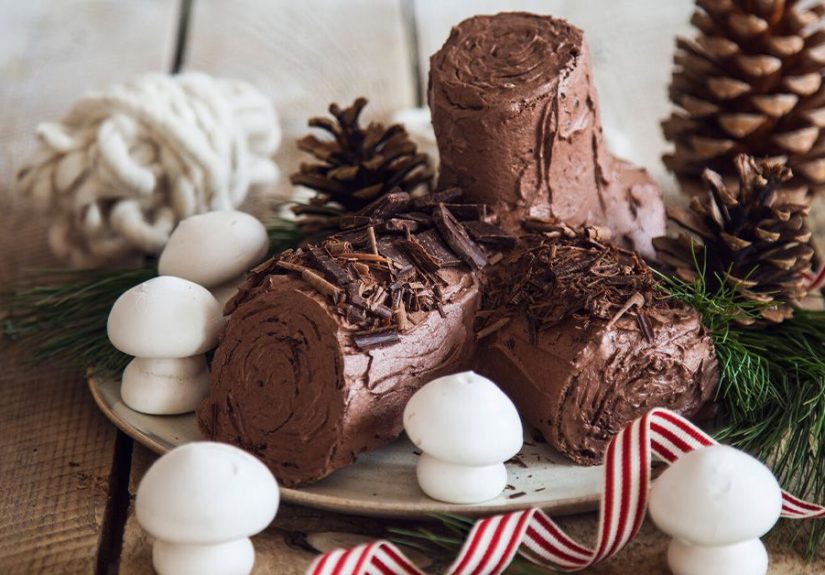
Bûche de Noël, or Yule log cake, is a classic French Christmas dessert. It is usually made from rolled sponge cake filled with cream and covered in chocolate buttercream to resemble a wooden log. Decorations may include powdered sugar “snow,” meringue mushrooms, berries, or tiny woodland ornaments.
The cake is inspired by the older European custom of burning a Yule log during winter celebrations. Eventually, as fireplaces became less central to daily life, the symbolic log moved from hearth to dessert table. Frankly, this seems like an upgrade. A chocolate log is easier to slice and far less likely to fill the living room with smoke.
French pâtisseries often create elaborate versions of bûche de Noël during December, with flavors such as chestnut, coffee, chocolate, raspberry, vanilla, and hazelnut. Whether homemade or bought from a bakery, it remains one of the most beautiful Christmas foods around the world.
7. Toshikoshi Soba Japan
New Year’s Eve noodles for longevity and letting go
Toshikoshi soba is a Japanese New Year’s Eve dish made with buckwheat noodles. The name roughly means “year-crossing soba,” and it is eaten on December 31 as families prepare to enter the new year.
The long noodles symbolize longevity, while their easy-to-cut texture is often associated with cutting away hardship from the old year. Soba is also linked to resilience because buckwheat can grow in tough conditions. In other words, this dish politely says, “May you live long, stay strong, and leave last year’s nonsense behind.”
Toshikoshi soba can be served hot in broth or cold with dipping sauce, depending on family preference and region. Its simplicity is part of its beauty. After the noise and rush of year-end activities, a bowl of soba offers a calm, meaningful way to pause.
8. Tangyuan or Yuanxiao China
Round rice dumplings for unity and reunion
Tangyuan and yuanxiao are glutinous rice balls commonly eaten during the Lantern Festival, which marks the end of Lunar New Year celebrations. These round dumplings may be filled with sesame paste, peanut, red bean, fruit, or nuts and served in a warm sweet broth.
The round shape symbolizes family unity, wholeness, and togetherness. That symbolism matters deeply during Lunar New Year, when reunion is one of the holiday’s central themes. Even the name tangyuan sounds similar to words associated with reunion in Chinese, making the dish both delicious and linguistically lucky.
The texture is chewy, soft, and pleasantly sticky. If you have never eaten tangyuan before, imagine a dessert dumpling that gives your teeth a tiny trampoline experience. It is playful, comforting, and deeply meaningful.
9. Twelve Grapes Spain
A New Year’s countdown with snack-based pressure
In Spain, many people welcome the New Year by eating twelve grapes at midnightone grape for each stroke of the clock. Each grape represents one month of the coming year, and eating all twelve in time is believed to bring good luck.
The tradition, known as las doce uvas de la suerte, is also practiced in parts of Latin America. It sounds simple until you try it. Suddenly, grapes become tiny fruit obstacles, and the countdown feels like a competitive eating event hosted by destiny.
Families and friends often gather around the television or town squares to follow the clock chimes. Some prepare peeled or seedless grapes to make the challenge easier. The custom is festive, funny, and suspenseful, which may be why it has remained so popular.
10. Hoppin’ John Southern United States
Black-eyed peas for prosperity
Hoppin’ John is a traditional New Year’s Day dish in the American South. It is typically made with black-eyed peas, rice, onion, spices, and smoked pork or another flavorful seasoning. It is often served with collard greens and cornbread.
The symbolism is all about prosperity. Black-eyed peas are associated with coins, greens represent money, and cornbread’s golden color suggests wealth. Basically, it is a financial planning seminar in food form, except tastier and with fewer spreadsheets.
Hoppin’ John reflects African, Caribbean, and Southern foodways, showing how holiday foods often carry complex histories of migration, adaptation, and resilience. For many families, eating it on January 1 is a ritual of hope: a warm bowl to begin the year with luck and gratitude.
11. Cotechino e Lenticchie Italy
Lentils that look like coins
In Italy, lentils are a popular New Year’s food because their round shape resembles small coins. They are often served with cotechino, a rich pork sausage, or zampone, stuffed pig’s trotter. The dish is traditionally eaten after midnight or on New Year’s Day.
The idea is simple: eat lentils, invite prosperity. This is one of the most practical food symbols in the world because lentils genuinely do look like tiny edible coins. Unlike actual coins, however, they are soft, earthy, and excellent with sausage.
The dish is hearty and deeply satisfying, especially in winter. It turns the hope for wealth into something warm and shareable, which is much more enjoyable than staring anxiously at a bank app.
12. Tourtière French Canada
A spiced meat pie for Christmas and New Year
Tourtière is a traditional French Canadian meat pie often served during Christmas and New Year celebrations, especially in Québec. It is usually made with a flaky pastry crust and a filling of ground pork, beef, veal, or game, seasoned with warm spices such as cloves, cinnamon, nutmeg, and allspice.
Tourtière is closely tied to réveillon, the festive meal eaten after Christmas Eve Mass in many French Canadian families. It is rich, savory, and deeply warmingthe kind of food that understands cold weather personally.
Every family seems to have its own version. Some include potatoes, some use different meats, and some guard their spice blend as if it were a national secret. Served with pickles, cranberry sauce, or ketchup, tourtière is a holiday centerpiece that tastes like heritage wrapped in pastry.
13. Kransekake Norway and Scandinavia
An almond ring cake that doubles as architecture
Kransekake is a Scandinavian celebration cake often served at Christmas, weddings, New Year’s, and other major events. Popular in Norway and Denmark, it is made from almond flour, sugar, and egg whites, shaped into rings, baked, and stacked into a tall cone or tower.
The texture is firm on the outside and chewy inside, similar to marzipan with a little more confidence. The rings are often decorated with royal icing, flags, or small ornaments. It is one of the few desserts that looks like it could apply for a building permit.
Kransekake is meant for sharing. Guests pull off rings piece by piece, making it interactive as well as beautiful. Its impressive height gives the holiday table drama without requiring a fog machine.
14. Pavlova Australia and New Zealand
A sunny Christmas dessert for summer holidays
In Australia and New Zealand, Christmas happens during summer, which changes the holiday menu. Instead of heavy winter puddings, many families serve pavlova, a meringue-based dessert with a crisp shell, soft marshmallow-like center, whipped cream, and fresh fruit.
Pavlova is often topped with strawberries, kiwi, passion fruit, berries, or mango. It is light, bright, and refreshingexactly the kind of dessert that makes sense when December feels less like snow and more like sunscreen.
Australia and New Zealand both claim a deep connection to pavlova, and the debate over its origin can get lively. But regardless of who gets official bragging rights, pavlova remains a beloved holiday food across the region.
15. Sheer Khurma South Asia
A sweet Eid dish made for sharing
Sheer khurma is a festive dessert commonly prepared for Eid al-Fitr in South Asian Muslim communities, including in India, Pakistan, and Bangladesh. The name means “milk with dates,” and the dish is made with milk, fine vermicelli, dates, nuts, sugar, and fragrant spices such as cardamom.
After Ramadan, Eid al-Fitr celebrates the end of fasting with prayer, family visits, generosity, and food. Sheer khurma is often served in the morning and shared with guests throughout the day. It is creamy, sweet, aromatic, and festive without being fussy.
Like many holiday foods, sheer khurma is not just about flavor. It is about hospitality. A bowl offered to a guest says, “You are welcome here,” which may be one of the most universal holiday messages of all.
Why Holiday Foods Matter Across Cultures
Holiday foods may look different from country to country, but they often express similar hopes. Long noodles wish for long life. Round dumplings symbolize unity. Lentils suggest wealth. Fried foods recall miracles. Sweet desserts mark abundance. Large batch dishes bring families into the kitchen together.
Food also helps preserve identity. A family may move across borders, learn new languages, and adapt to new routines, but one familiar holiday dish can carry generations of memory. The smell of bibingka, the crackle of latkes, the steam from tamales, or the first slice of panettone can instantly reconnect people to home.
That is why unique holiday foods from around the world are so fascinating. They are not random dishes placed on festive tables. They are edible traditions that answer big human questions: Who are we? What do we remember? What do we hope for next?
Experience Section: What It Feels Like to Explore 15 Unique Holiday Foods from Around the World
Exploring holiday foods from around the world feels a little like opening fifteen different doors and finding a party behind each one. The first thing you notice is that every culture has its own rhythm. Some holiday foods are quiet and reflective, like a bowl of toshikoshi soba eaten before the year changes. Others are loud, crowded, and gloriously messy, like a tamalada where masa ends up on the table, the counter, and probably someone’s sleeve.
One of the most enjoyable experiences is seeing how different climates shape holiday meals. In colder places, festive foods tend to be rich, warm, and filling. Tourtière, cotechino with lentils, and panettone all feel built for winter evenings when people gather indoors and the kitchen becomes the warmest room in the house. These dishes are cozy in a very practical way. They do not whisper comfort; they announce it with pastry, sausage, butter, and spice.
Then there are summer holiday foods like pavlova. For people used to snowy Christmas imagery, an Australian or New Zealand Christmas table can feel wonderfully surprising. A dessert covered with cream and fresh fruit makes perfect sense when the weather is hot. Pavlova tastes like celebration without heaviness. It is crisp, soft, sweet, tart, and bright all at once. It reminds you that holiday food does not need to follow one global script. Santa can survive without snow. He may even appreciate a mango topping.
Another memorable part of these food traditions is the teamwork. Tamales, latkes, bibingka, and sheer khurma all show how cooking becomes social during holidays. People gather not only to eat but to prepare, teach, argue gently, laugh loudly, and correct each other’s technique. In many families, the “recipe” is not written down. It lives in someone’s hands. A grandmother knows when the masa feels right. An uncle knows when the oil is hot enough. A parent knows exactly how much cardamom belongs in the milk. Measuring cups are helpful, but holiday confidence often comes from memory.
Trying these foods also changes the way you think about luck. Around the world, people eat symbolic foods to invite prosperity, health, unity, and happiness. Grapes in Spain, lentils in Italy, black-eyed peas in the American South, tangyuan in China, and soba in Japan all turn hope into something physical. That is comforting. Instead of simply wishing for a better year, people cook it, share it, chew it, and pass it around the table.
The best experience, though, is realizing that holiday foods are both deeply specific and surprisingly universal. The flavors may differcoconut, sesame, almond, corn, potato, chocolate, cardamombut the emotions are familiar. People want to gather. They want to remember loved ones. They want to welcome guests. They want the next year to be kinder than the last. And if dessert happens to be involved, humanity is clearly doing something right.
Conclusion
The world’s holiday foods are proof that celebration is deliciously diverse. Some dishes, like panettone and bûche de Noël, turn baking into art. Others, like tamales and latkes, transform cooking into community. Foods such as tangyuan, lentils, soba, and Hoppin’ John show how meals can carry wishes for unity, luck, long life, and prosperity.
Whether you are planning a global holiday menu, researching traditional festive dishes, or simply looking for something more exciting than the usual seasonal spread, these 15 unique holiday foods from around the world offer a flavorful place to begin. Try one, learn its story, and share it with someone. That is how traditions traveland how dinner gets much more interesting.