Table of Contents >> Show >> Hide
- Why ‘Christmas Vacation’ Still Works After All These Years
- Meet Le sapin a des boules: Quebec’s Griswold Translation
- How It Became the ‘Rocky Horror’ of French Canada
- Why Audience Participation Makes the Movie Funnier
- The Quebec Connection Runs Deeper Than the Dub
- What Makes This Different From a Normal Holiday Screening?
- Why French Canada Claimed Clark Griswold
- The Rocky Horror Formula, Wrapped in Christmas Lights
- Specific Scenes That Thrive in a Participatory Setting
- What Marketers and Pop Culture Writers Can Learn From This
- Experiences: What a Night at Le sapin a des boules Feels Like
- Conclusion: Clark Griswold, Cult Hero of Quebec Christmas
Some holiday movies are watched. Others are quoted, decorated around, defended at family dinners, and played so often that the remote control practically files a complaint. In French Canada, especially Quebec, National Lampoon’s Christmas Vacation has climbed into that second category wearing a Santa hat, a bathrobe, and possibly Cousin Eddie’s white shoes.
The 1989 comedy, known in Quebec as Le sapin a des boules, has become more than a seasonal rerun. It has evolved into a full-blown participatory Christmas event, complete with live actors, crowd callbacks, costumes, synchronized stage moments, lighting effects, and the kind of joyful public chaos usually associated with The Rocky Horror Picture Show. In other words, Clark Griswold has entered his midnight-movie eraand he brought 25,000 twinkling lights with him.
What makes this phenomenon fascinating is not simply that people still love Christmas Vacation. Plenty of people do. The film is a holiday staple across North America. What makes Quebec’s relationship with it special is how the French-dubbed version became its own cultural object: familiar, funny, local, communal, and strangely theatrical. It is not just a movie people remember. It is a movie people perform back to itself.
Why ‘Christmas Vacation’ Still Works After All These Years
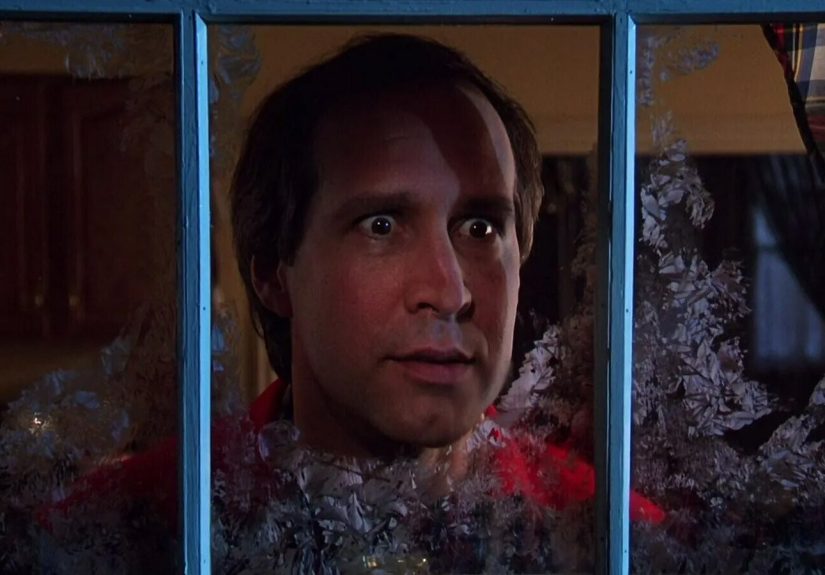
Directed by Jeremiah S. Chechik and written by John Hughes, National Lampoon’s Christmas Vacation arrived in theaters in 1989 as the third major installment in the Griswold family saga. Chevy Chase returned as Clark Griswold, the father who wants one perfect family Christmas and instead receives an exploding turkey, uninvited relatives, electrical humiliation, a squirrel attack, and the world’s least romantic membership in the Jelly of the Month Club.
The movie’s durability comes from a simple truth: Christmas is supposed to be magical, but in real life it often behaves like a raccoon trapped in wrapping paper. Clark’s dream of the perfect holiday is hilarious because it is so recognizable. He wants the tree, the lights, the dinner, the family bonding, the bonus check, the Norman Rockwell glow. What he gets is stress with tinsel on it.
That gap between expectation and reality is the engine of the film. The more Clark insists that everything is going to be wonderful, the more the universe responds, “Interesting theory, Sparky.” The humor is broad, but the emotional foundation is surprisingly sturdy. Beneath the pratfalls and rants is a man who desperately wants to give his family a Christmas worth remembering. Unfortunately, he succeeds in the most medically questionable way possible.
Meet Le sapin a des boules: Quebec’s Griswold Translation
In Quebec, the film is widely known as Le sapin a des boules, a title that carries a cheeky double meaning. On the surface, it refers to a Christmas tree with ornaments. But “boules” also gives the title a wink that feels perfectly suited to the movie’s slightly naughty, slapstick personality. It sounds less like a polite holiday card and more like something Cousin Eddie would say while emptying the RV.
The Quebec French dub matters because it is not merely a translation. For many viewers, it is the version they grew up with on television. Its voices, rhythms, punch lines, and localized comic flavor became part of the holiday atmosphere. Just as some families need tourtière, stockings, or a specific brand of questionable fruitcake, many Quebec households need Clark Griswold yelling in French.
This is where the movie becomes culturally interesting. Dubbing can sometimes flatten comedy, especially when jokes rely on timing, idioms, or American suburban references. But the Quebec version appears to have done the opposite for its fans. It added a new layer of comic identity. The Griswolds remained American, but the way they sounded made them feel familiar in a distinctly Quebec way.
How It Became the ‘Rocky Horror’ of French Canada
The comparison to The Rocky Horror Picture Show is not about genre. One film has corsets, aliens, and “The Time Warp.” The other has eggnog, a flaming tree, and Randy Quaid in a bathrobe. The connection is ritual.
Rocky Horror became legendary because audiences refused to sit quietly. Starting with midnight screenings in the 1970s, fans talked back to the screen, dressed as characters, brought props, and eventually created “shadow casts” that performed the movie live in front of the projected film. The screening became half cinema, half theater, half partywhich is mathematically impossible, but emotionally accurate.
Quebec’s participatory screenings of Le sapin a des boules follow a similar logic. The audience is not treated as a passive crowd. It becomes part of the show. Viewers are encouraged to shout specific words at key moments, react together, clap, laugh, and join the rhythm of the performance. Live actors recreate scenes in sync with the film. Costumes and stage business turn the movie into something that seems to spill out of the screen and into the room.
At Montreal’s Club Soda, the event has grown into a festive tradition presented by McFly EVT, connected with the Festival SPASM team. Early participatory screenings began around the film’s 30th anniversary in 2019, paused during the pandemic years, then returned with growing momentum. Recent editions have featured large casts, many costume changes, puppets, audience instructions, and the kind of holiday energy that makes a normal movie night look like a library study session.
Why Audience Participation Makes the Movie Funnier
Comedy is contagious. A joke that makes one person chuckle at home can become a minor civic emergency when hundreds of people laugh at once. That is the secret power of participatory screenings. They do not replace the movie; they amplify it.
When viewers shout callbacks, cheer for famous moments, or recognize a scene before it arrives, they create anticipation. Everyone knows the squirrel is coming. Everyone knows the lights will finally blaze. Everyone knows Clark’s patience has the structural integrity of wet gingerbread. The pleasure comes not from surprise, but from shared timing.
This is why Christmas Vacation is especially suited to the format. It is already built from set pieces: the tree hunt, the sled ride, the Christmas lights, the turkey, the squirrel, the sewer explosion, the bonus meltdown. Each scene has a clear shape and payoff. That makes it easy for a live cast and an audience to turn familiar beats into communal rituals.
The Quebec Connection Runs Deeper Than the Dub
The phenomenon also has a meaningful Montreal connection. Director Jeremiah S. Chechik was born in Montreal and studied at McGill University before building his career in the United States. His return to Montreal for anniversary screenings gave the event an extra emotional layer: the creator of a beloved American Christmas comedy discovering that, in Quebec, his movie had become a local holiday anthem.
That detail helps explain why the story resonates. Le sapin a des boules is not just an imported Hollywood film that happened to become popular. It is a Hollywood film with Quebec fingerprints in its cultural afterlife. The director’s roots, the French-language dub, the Montreal stage event, and the crowd’s annual devotion all combine to create something regionally specific.
Many Christmas movies are nostalgic, but this one has become interactive nostalgia. The audience is not simply remembering childhood television broadcasts. It is re-creating them out loud, in public, with strangers who somehow know exactly when to yell, laugh, and clap. That is how a movie becomes a tradition.
What Makes This Different From a Normal Holiday Screening?
A standard holiday screening says, “Here is a movie you love.” A participatory screening says, “Here is a movie you love; now please become part of the electrical disaster.”
The difference is huge. In a normal theater, the audience is expected to behave. At Le sapin a des boules, behavior is the point. Fans arrive ready to play. Ugly Christmas sweaters become informal uniforms. Familiar quotes become social cues. The room carries the excited tension of a party where everyone has seen the same disaster coming for 35 years and still cannot wait for it to happen again.
Live performers also change the emotional temperature. Watching Clark on screen is funny. Watching an actor recreate Clark’s panic in front of the screen while the crowd roars is something else entirely. The movie becomes layered: film, theater, concert, inside joke, and family reunion all at once.
Why French Canada Claimed Clark Griswold
On paper, the Griswolds are an extremely American family. Their home, decorations, suburban anxieties, office bonus drama, and oversized holiday expectations all come from a recognizable U.S. comic tradition. Yet Quebec audiences embraced them because the emotional comedy travels well. The details are American; the stress is universal.
Anyone who has hosted relatives knows the horror of too many people in one house. Anyone who has tried to make a holiday “perfect” knows that perfection is usually the first ornament to shatter. Anyone who has smiled through a family disaster while silently screaming into the cranberry sauce understands Clark Griswold.
The Quebec French dub helped turn that universal stress into local comfort food. Over time, the film became part of the annual television rhythm. People quoted it. Families passed it down. Then the participatory screenings gave that private nostalgia a public home.
The Rocky Horror Formula, Wrapped in Christmas Lights
The genius of the Rocky Horror model is that it turns repetition into celebration. Nobody goes to a midnight screening because they wonder what happens next. They go because they already know. Knowledge becomes participation. Participation becomes belonging.
Le sapin a des boules uses the same formula with holiday warmth instead of gothic glam. The crowd does not need to be shocked. It wants to be included. The familiar scenes create a shared script, and the live event gives people permission to be loud, silly, affectionate, and festive. In a season often overloaded with pressure, that permission is powerful.
Christmas can be emotionally complicated. It mixes joy, money stress, family tension, memory, grief, travel, food, and the annual question of why extension cords are always tangled like mythological sea monsters. A participatory screening releases that pressure. It lets people laugh at the mess together.
Specific Scenes That Thrive in a Participatory Setting
The Christmas Lights
Clark’s battle with the house lights is practically designed for a crowd. The repeated failures, the dramatic plug-in moment, and the eventual blinding success are perfect for cheers, lighting effects, and collective anticipation. Everyone knows the payoff is coming, and that makes the buildup funnier.
The Squirrel Scene
The squirrel sequence is pure physical chaos. It has screaming, running, destruction, and the kind of animal-based panic that requires no cultural translation. Add a live cast and a room full of fans, and it becomes holiday slapstick opera.
Cousin Eddie’s Arrival
Cousin Eddie is already a walking audience callback. His RV, wardrobe, and magnificent lack of shame give viewers permission to laugh before he even opens his mouth. In a participatory screening, Eddie becomes less of a character and more of a public service announcement about boundaries.
The Bonus Meltdown
Clark’s reaction to his missing bonus remains one of the great workplace-holiday explosions in American comedy. It is funny because it is excessive, but it is satisfying because nearly everyone understands the disappointment behind it. The Jelly of the Month Club may be “the gift that keeps on giving,” but so is a good rant.
What Marketers and Pop Culture Writers Can Learn From This
The rise of Le sapin a des boules as an interactive event offers a useful lesson: nostalgia becomes stronger when people can participate in it. Streaming makes movies available. Events make them memorable.
In an age when audiences can watch almost anything at home, theaters and event producers need more than a screen. They need a reason for people to gather. Participatory screenings provide that reason. They transform passive entertainment into a social ritual.
This is also why the event is SEO-friendly as a topic. It combines multiple search interests: Christmas Vacation, Quebec Christmas traditions, French-dubbed movies, Montreal events, cult film screenings, audience participation, and Rocky Horror Picture Show comparisons. It is a perfect example of how a familiar film can gain new relevance through local culture.
Experiences: What a Night at Le sapin a des boules Feels Like
The experience begins before the movie does. People do not arrive like they are attending a quiet screening. They arrive like they are entering a holiday party where the guest of honor is a dangerously overloaded fuse box. There are Christmas sweaters, Santa hats, plaid shirts, festive scarves, and at least a few outfits that seem inspired by Cousin Eddie’s heroic commitment to comfort over dignity.
The atmosphere is warmer than a standard cinema crowd. Strangers talk. People compare favorite scenes. Someone inevitably quotes a line before the lights go down. The room has that December feeling: half nostalgia, half sugar rush, half “I hope my parking meter survives.” Again, the math is questionable, but the mood is correct.
Once the film starts, the audience quickly understands that silence is not required. In fact, silence would be rude to the spirit of the event. The crowd reacts together, and the reactions become part of the rhythm. A kiss may trigger a shouted response. A snobby neighbor may receive a verbal greeting from hundreds of people who have apparently been waiting all year for the opportunity. A famous visual gag lands twice: once on screen, once through the audience’s anticipation.
The live actors make the night feel almost three-dimensional. They do not simply imitate the movie; they help release it into the room. When performers recreate iconic scenes, the audience watches both the original and the tribute at once. That double vision is the fun. It feels like watching childhood television memories escape the VHS tape and run around the stage wearing winter boots.
For longtime fans, the pleasure is recognition. They know the jokes, the voices, the timing, and the emotional shape of the story. For newcomers, the pleasure is discovery. They may arrive thinking they are going to watch an old Christmas comedy. They leave understanding that they have joined a seasonal clubone with better lighting than most clubs and significantly more squirrel-related trauma.
Families can enjoy it because the movie sits in that sweet spot between broad comedy and holiday sentiment. Adults laugh at Clark’s financial stress and social humiliation. Younger viewers laugh at the physical disasters. Everyone laughs at the turkey, because the turkey deserves it.
What lingers after the event is not only the film itself, but the feeling of collective release. December can be exhausting. People are shopping, traveling, planning meals, managing expectations, and pretending not to notice that one relative has opinions about everything. A participatory Christmas Vacation screening turns that seasonal pressure into shared laughter. It says, “Yes, the holidays are ridiculous. Let’s enjoy the collapse together.”
That is why the comparison to Rocky Horror works so well. Both events transform moviegoing into belonging. Both reward repeat attendance. Both make the audience part of the performance. And both prove that a cult classic is not created by a studio alone. It is created by fans who keep showing up, dressing up, shouting back, and making the movie bigger than itself.
Conclusion: Clark Griswold, Cult Hero of Quebec Christmas
Christmas Vacation did not set out to become the Rocky Horror Picture Show of French Canada. It set out to make people laugh at one man’s doomed attempt to create the perfect family Christmas. But culture has a funny way of adopting the things that help it express itself. In Quebec, Le sapin a des boules became more than a dubbed holiday comedy. It became a shared seasonal language.
The participatory screenings show how powerful a movie can become when audiences are invited to love it loudly. Clark Griswold’s Christmas disaster now lives not only on television screens, but on stage, in crowds, in callbacks, in costumes, and in the annual joy of people gathering to watch everything go magnificently wrong.
That may be the real magic of the movie. Clark never gets the perfect Christmas he planned. Instead, he gets a ridiculous, messy, unforgettable one. And in French Canada, that messy Christmas has become a tradition worth shouting about.
Note: This article is original, rewritten SEO content based on publicly available film history, event information, and cultural reporting. It contains no copied source passages and no embedded source links.