Table of Contents >> Show >> Hide
- Why People Are Afraid of AI in the First Place
- Google’s Core Argument: AI Should Be Helpful, Not Mysterious
- AI Is Already Helping in Real-World Ways
- Why “Don’t Be Afraid” Does Not Mean “Trust Everything”
- The Real Skill of the AI Era: Judgment
- What Businesses Should Learn from Google’s AI Message
- What Individuals Can Do Right Now
- Experience Notes: Learning Not to Fear AI in Real Work
- Conclusion: Don’t Fear AILearn How to Lead It
Artificial intelligence has become the new office coworker, search assistant, coding buddy, homework helper, image maker, medical research accelerator, and occasionally the reason your group chat starts debating whether robots will steal everyone’s jobs before lunch. So when a Google artificial intelligence leader says you should not be afraid of AI, the message is not, “Relax, nothing can go wrong.” That would be like telling someone not to worry about fire because candles are pretty.
The smarter message is this: fear is understandable, but fear is not a strategy. AI is powerful, imperfect, fast-moving, and already woven into daily life. The answer is not panic, denial, or pretending your spreadsheet did not just become weirdly philosophical. The answer is informed confidence: understand what AI can do, where it fails, how responsible companies are trying to manage risks, and how ordinary people can use it without surrendering their judgment at the door.
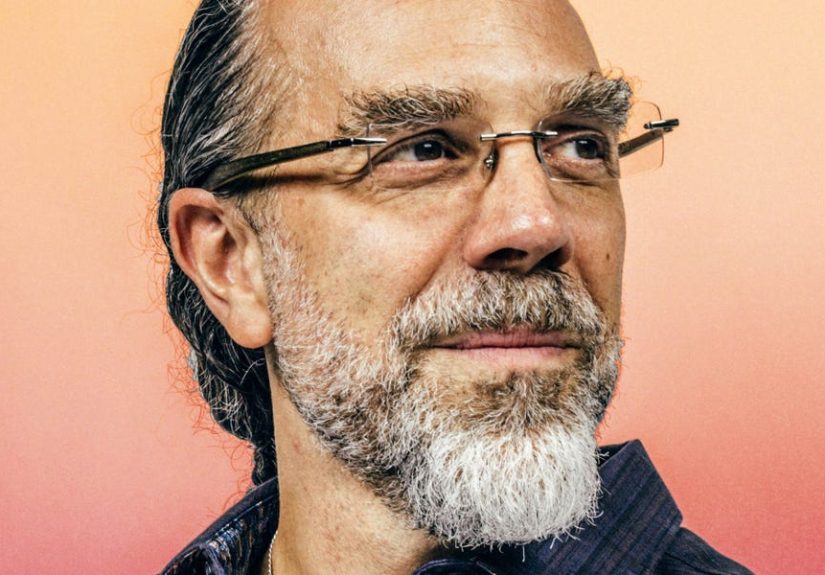
The title idea echoes a well-known conversation with Astro Teller, the head of Alphabet’s moonshot factory X, who argued that anxiety about AI is normal because people naturally imagine what could go wrong before they imagine what could go right. That is not foolishness; it is human risk detection doing push-ups. But Teller’s broader point still matters today: we should not ignore AI’s challenges, yet we should not let fear blind us to its benefits either.
In the years since that interview, AI has moved from research labs into Google Search, Gmail, Google Workspace, smartphones, software development, medicine, climate forecasting, education, and creative work. Google DeepMind’s Demis Hassabis, Google’s James Manyika, CEO Sundar Pichai, and many other leaders have framed AI as a technology that should be developed boldly and responsibly. That phrase matters. “Bold” without “responsible” becomes reckless. “Responsible” without “bold” becomes a very expensive committee meeting. The future needs both.
Why People Are Afraid of AI in the First Place
Let’s be honest: AI fear did not appear out of nowhere. People worry that artificial intelligence will replace jobs, spread misinformation, weaken human creativity, invade privacy, make biased decisions, or become so capable that humans lose control. Some of those concerns are realistic. Some are exaggerated. Some are movie trailers wearing a lab coat.
Public opinion shows that many Americans are cautious. Surveys have found that people are often more concerned than excited about the growing use of AI in daily life, especially when it touches personal relationships, creativity, privacy, and decision-making. That does not mean the public is anti-technology. It means people want control, transparency, and reassurance that AI systems are being built with human needs in mind.
The Fear of Job Loss
The most common worry is simple: “Will AI take my job?” The better question is, “Which parts of my job will AI change?” Most jobs are bundles of tasks. AI may automate some tasks, accelerate others, and create new responsibilities that did not exist before. A marketer may use AI for first drafts and keyword clustering, then spend more time on strategy. A developer may use an AI coding assistant, then focus more on architecture, testing, and problem-solving. A doctor may use AI to summarize records, but still needs clinical judgment, empathy, and accountability.
Research on generative AI in the workplace suggests that AI often helps newer or less-experienced workers improve faster. In customer support, writing, software development, and analysis-heavy roles, AI can reduce repetitive work and narrow skill gaps. That does not mean no jobs will disappear. Some will. But history suggests that major technologies usually rearrange work before they erase work entirely. The printing press, electricity, the internet, and smartphones all disrupted jobs. They also created industries that would have sounded ridiculous before they existed. Imagine explaining “app store optimization specialist” to someone in 1985.
The Fear of Losing Human Thinking
Another fear is more subtle: not that AI will become too smart, but that humans will become too lazy. This concern is valid. If people use AI as a replacement for thinking, writing, calculating, researching, or learning, skills can weaken. A calculator is useful, but nobody wants a bridge designed by someone who skipped math because “the device seemed confident.”
The healthiest way to use AI is as a thinking partner, not a thinking substitute. Ask it to brainstorm, compare options, summarize complex information, identify blind spots, or challenge your assumptions. Then verify important claims, apply context, and make the final decision yourself. In plain English: let AI carry the groceries, not choose your life philosophy.
Google’s Core Argument: AI Should Be Helpful, Not Mysterious
Google’s public AI messaging has repeatedly centered on making AI helpful, useful, and responsible. Its AI principles emphasize developing AI that benefits people, supports scientific progress, protects safety and privacy, mitigates unfair bias, and uses human oversight where needed. That does not make every AI product perfect. It does show that the conversation has moved beyond “Can we build it?” toward “How should we build it, test it, deploy it, and improve it?”
This is the heart of why people should not be afraid of AI: the technology is not magic. It is software, data, model training, evaluation, user feedback, safety testing, and governance. When AI feels mysterious, it becomes scary. When it is explained clearly, with limitations and safeguards, it becomes a tool people can judge more fairly.
Responsible AI Means Admitting Limitations
One of the most important signs of responsible AI is not claiming perfection. Modern AI systems can produce impressive answers, but they can also hallucinate, misunderstand context, reflect bias in training data, or give outdated information. That is why model cards, safety reports, content filters, evaluation benchmarks, and responsible AI frameworks matter. They do not eliminate every risk, but they help users, developers, businesses, and regulators understand what a model is designed to do and where caution is needed.
Google DeepMind has published model cards for Gemini models that describe capabilities, limitations, mitigation approaches, and safety performance. Google has also discussed its Frontier Safety Framework, which focuses on monitoring more advanced AI capabilities that could create severe risks if misused. In other words, the serious people building AI are not saying, “Trust us, bro.” They are building systems for testing, measuring, documenting, and improving safety.
AI Is Already Helping in Real-World Ways
Fear gets clicks, but usefulness changes lives. AI is already helping in areas where humans face too much data, too little time, or problems too complex for traditional tools alone.
AI in Science and Medicine
One of the clearest examples is AlphaFold, the Google DeepMind system that predicts protein structures. Protein folding used to be one of biology’s most difficult puzzles. Understanding protein structures can help researchers study diseases, develop medicines, and explore the machinery of life. AlphaFold’s impact was so significant that Demis Hassabis and John Jumper, along with David Baker, were awarded the 2024 Nobel Prize in Chemistry for work connected to protein structure prediction and design.
This is the kind of AI story that deserves more attention. It is not a chatbot writing a questionable poem about your refrigerator. It is AI accelerating scientific discovery in ways that may support drug development, disease research, and biotechnology. That does not mean AI replaces scientists. It gives scientists a more powerful microscope for invisible problems.
AI in Climate and Disaster Preparedness
Google has also used AI in flood forecasting. Its Flood Hub and related systems use hydrological modeling and public data sources to forecast riverine floods days in advance across many countries. For communities facing extreme weather, earlier warnings can mean more time to evacuate, protect property, move livestock, prepare emergency services, and save lives.
That is a very different image of AI than the popular “robot overlord” fantasy. Sometimes AI looks less like a metal skeleton and more like a weather alert arriving before the water does.
AI in Everyday Productivity
For everyday users, AI’s biggest benefit may be simple acceleration. It can summarize long documents, draft emails, organize notes, translate text, generate study guides, debug code, analyze data, and help people get unstuck. Used well, it removes the blank-page problem. It does not have to replace your voice. It can help you find it faster.
For example, a small business owner can use AI to draft product descriptions, compare customer reviews, create FAQ pages, or brainstorm social media posts. A teacher can create lesson outlines and then adjust them for real classroom needs. A student can ask AI to explain a concept three different ways, then test their understanding. A writer can use AI to generate angles, but still bring the personality, structure, humor, and judgment that make content worth reading.
Why “Don’t Be Afraid” Does Not Mean “Trust Everything”
The healthiest attitude toward AI is neither blind fear nor blind faith. Blind fear keeps people from learning useful tools. Blind faith leads people to copy and paste nonsense with the confidence of a raccoon stealing a sandwich. A balanced approach says: AI is useful, but verification matters.
Use AI Where It Is Strong
AI is strong at pattern recognition, summarization, language generation, brainstorming, classification, translation, coding assistance, and working through large amounts of information quickly. It is especially useful when the cost of a first draft being imperfect is low. Need ten headline ideas? Great. Need a summary of a meeting transcript? Helpful. Need a first version of a customer email? Perfectly reasonable.
Be Careful Where Stakes Are High
AI should be used carefully in medicine, law, finance, hiring, education, mental health, public safety, and other high-stakes areas. In these contexts, the final decision should involve qualified humans, transparent processes, and accountability. AI can support experts, but it should not quietly become the expert without anyone noticing.
A simple rule works well: the higher the stakes, the more human review you need. If AI gives you a recipe for banana bread, the worst-case scenario is a sad loaf. If AI gives you medical advice, legal guidance, or investment recommendations, verification is not optional. Your future self will appreciate the extra step.
The Real Skill of the AI Era: Judgment
As AI becomes more common, the most valuable human skill may be judgment. Not just technical judgment, but editorial judgment, ethical judgment, emotional judgment, and practical judgment. Can you tell when an AI answer sounds plausible but is missing evidence? Can you decide when automation is helpful and when a human touch matters more? Can you protect privacy while using powerful tools? Can you ask better questions?
Prompting is useful, but judgment is the real superpower. Anyone can ask AI to write a paragraph. Not everyone can tell whether that paragraph is accurate, persuasive, original, respectful, and appropriate for the audience. That is where humans remain essential.
AI Rewards People Who Stay Curious
The people who benefit most from AI are not necessarily the people with the fanciest tools. They are the people who stay curious. They test. They compare. They ask follow-up questions. They learn the basics of how models work. They understand that AI can be both impressive and wrong. They treat it like a brilliant intern: fast, tireless, occasionally dazzling, and still in need of supervision.
What Businesses Should Learn from Google’s AI Message
For businesses, the lesson is not “install AI everywhere immediately and hope the quarterly report claps.” The lesson is to match AI to real problems. Start with workflows where employees lose time to repetitive tasks, scattered information, slow drafting, customer service bottlenecks, data cleanup, or reporting. Then create rules for review, privacy, security, and quality control.
AI adoption fails when leaders treat it as decoration. It succeeds when they redesign processes around measurable outcomes. Faster response times, better knowledge sharing, fewer manual errors, improved training, and stronger customer experiences are better goals than “we used AI because everyone on LinkedIn was yelling about it.”
Train People, Not Just Systems
The most overlooked part of AI transformation is employee training. People need to know what information they can enter into AI tools, how to verify outputs, when to escalate to a human expert, and how to avoid bias or overreliance. A company that gives employees AI tools without guidance is basically handing out chainsaws and saying, “Teamwork!”
Responsible AI in business means clear policies, approved tools, documentation, human review, cybersecurity safeguards, and a culture where employees can question outputs. If an AI system makes a recommendation, people should be able to ask: Why? Based on what? With what limitations? Who is accountable?
What Individuals Can Do Right Now
You do not need to become a machine learning engineer to stop being afraid of AI. You need a practical relationship with it. Start small. Use AI to summarize something you already understand, then check whether it captured the main points. Ask it to explain a topic at beginner, intermediate, and expert levels. Use it to brainstorm, then choose the best idea yourself. Let it challenge your draft, but keep your own voice.
Protect sensitive information. Do not paste private financial details, confidential business documents, personal medical records, or other sensitive data into tools unless you fully understand the privacy settings and organizational policy. Be skeptical of confident answers. Ask for assumptions. Ask for alternative viewpoints. Ask what could be wrong.
Most importantly, keep learning. AI is not a single product; it is a moving category of tools. The best defense against fear is familiarity. The first time you use AI, it may feel strange. The tenth time, it feels useful. The hundredth time, you start noticing where it fits, where it fails, and where your own judgment matters most.
Experience Notes: Learning Not to Fear AI in Real Work
In practical work, the fastest way to become less afraid of AI is to use it on low-risk tasks and observe what happens. For example, imagine a content writer staring at a blank page with a deadline approaching like a tiny storm cloud. AI can help outline the article, suggest subtopics, generate headline variations, and identify questions readers may ask. But the writer still needs to decide what is useful, what sounds generic, what needs fact-checking, and what deserves a human joke that does not feel like it came from a corporate greeting card.
The same pattern appears in business operations. A manager can use AI to summarize meeting notes, but the summary still needs review. Maybe the AI captured the budget discussion but missed the awkward silence after someone mentioned the launch date. Humans understand context, politics, emotion, and priorities in ways AI cannot reliably detect. That is not a weakness of AI; it is a reminder of what humans bring to the table.
Students can also learn from AI without letting it do the learning for them. A good use is asking AI to explain photosynthesis like a teacher, then like a scientist, then like a comic book narrator. A bad use is copying the answer and submitting it as original work. The first approach builds understanding. The second builds dependency and possibly a very uncomfortable conversation with a teacher.
For professionals, the most valuable experience is discovering that AI often improves the first 30 percent of a task, not the final 10 percent. It can get you moving. It can reduce friction. It can provide structure. But the final polish, ethical judgment, factual verification, brand voice, client sensitivity, and strategic decision-making still belong to people. AI is excellent at producing material. Humans are better at knowing what the material should mean.
Another useful experience is seeing AI make mistakes. This may sound odd, but it is reassuring. Once you catch AI inventing a citation, misunderstanding a question, or giving advice that is too broad, the magic spell breaks. You stop seeing it as an all-knowing machine and start seeing it as a powerful but limited tool. That shift is healthy. Fear often comes from overestimating AI. Confidence comes from understanding both its strengths and its flaws.
The best personal workflow is simple: ask, inspect, improve, verify. Ask AI for help. Inspect the output carefully. Improve it with your expertise. Verify anything factual or important. Over time, this turns AI from a threat into leverage. It becomes a second screen for thinking, not a replacement brain.
So, should you be afraid of AI? No. You should be awake. You should be curious. You should be careful with sensitive data, skeptical of unsupported claims, and willing to learn new skills. AI will change work, education, creativity, science, and daily life. But change is not automatically doom. Sometimes it is a tool waiting for better instructions.
Conclusion: Don’t Fear AILearn How to Lead It
Google’s artificial intelligence leaders have helped shape a more mature public conversation about AI. The point is not that AI is harmless. It is not. The point is that fear alone does not protect anyone. Responsible development, public transparency, human oversight, better education, and practical experience are far more useful.
AI can help scientists study proteins, communities prepare for floods, workers become more productive, students learn difficult topics, and businesses serve customers faster. It can also make mistakes, amplify bias, spread misinformation, and weaken human skills if used carelessly. That is exactly why the future of AI should be guided by humans who understand both the promise and the risk.
The best response to AI is not panic. It is participation. Learn the tools. Question the outputs. Protect your judgment. Use AI to become more capable, not more passive. The future is not about humans versus machines. It is about humans deciding how machines should serve human goals. And that, thankfully, is still our job.
Editorial note: This publication-ready article is based on publicly available information from reputable sources including Google, Google DeepMind, NIST, Stanford HAI, Pew Research Center, MIT Sloan, the World Economic Forum, Nobel Prize materials, and established technology reporting. It is written as original editorial content with no copied source passages.