Table of Contents >> Show >> Hide
- The Big Rule: Don’t Cook Lobster Tails by Vibes Alone
- Before You Cook: Pick, Thaw, and Prep Like a Pro
- How Long to Boil Lobster Tails
- How to Broil Lobster Tails
- How to Grill Lobster Tails
- Butter, Sauces, and Simple Seasonings That Actually Make Sense
- How to Tell When Lobster Tails Are Done (Without Guessing)
- FAQs People Always Ask (Right Before Dinner)
- Kitchen Notes: Real-World Lobster Tail Experiences (So You Don’t Learn the Hard Way)
- Conclusion
- SEO Tags
Lobster tails are the “tiny tuxedo” of weeknight seafood: they look fancy, feel celebratory, and somehow convince everyone you did something complicated.
The truth? Lobster tails are mostly about timing. Cook them a smidge too long and they go from buttery to bouncy (not the fun kind). Nail the window and
you get sweet, tender meat that tastes like a vacation you can eat.
This guide gives you clear boil times (with a practical minute-per-ounce rule), plus foolproof ways to grill and broil lobster tails so they come out
juicywhether you’re cooking a couple of 4-ounce tails or the “wow, that’s a tail” 10-ounce size.
The Big Rule: Don’t Cook Lobster Tails by Vibes Alone
Lobster tail doneness is easy to recognize once you know the tells:
the meat turns opaque (not translucent), firms up, and the shell goes bright red. For precision, use a quick-read thermometer in the thickest part of the meat.
Food-safety guidance commonly cites 145°F for fish and shellfish, but many cooks pull lobster tails closer to 140–145°F to avoid
rubbery texture, since lobster can coast upward slightly after you remove it from heat.
Why timing varies (and why that’s normal)
- Tail size and thickness: Two “6-ounce tails” can cook differently if one is thicker.
- Fresh vs. frozen (and thawed vs. half-frozen): Frozen meat cooks unevenly; thawing helps.
- Split vs. unsplit shells: A butterflied tail cooks faster than one left intact.
- Your heat source: Not all broilers broil like they mean it.
Before You Cook: Pick, Thaw, and Prep Like a Pro
Choosing lobster tails
Most grocery-store tails are either cold-water lobster tails (often from Maine/Canadian waters) or warm-water/spiny lobster tails. Both can be delicious.
Cold-water tails are often prized for sweeter flavor and slightly more tender texture; warm-water tails can be larger and a bit firmer.
Either way, your best move is to buy tails that smell clean (like the ocean, not “fishy”) and are kept properly chilled.
Thawing frozen lobster tails safely
If your tails are frozen, thawing is the easiest way to avoid the classic problem where the outside overcooks before the center is ready.
The safest, best-quality method is overnight in the refrigerator. In a hurry? Seal tails in a leak-proof bag and thaw in
cold water (change the water occasionally so it stays cold). If you microwave-defrost, cook immediately afterward and watch carefully.
Simple prep that improves results
- Rinse and dry: Pat shells dry so they don’t steam themselves on the grill or under the broiler.
- Optional: butterfly/split: Cutting the shell lengthwise helps seasoning reach the meat and speeds even cooking.
- Prevent curling: For grilling/broiling, a skewer through the length of the tail meat can help it stay straighter (and prettier).
How Long to Boil Lobster Tails
Boiling is fast, reliable, and perfect when you want lobster meat for rolls, salads, pasta, or “I just want butter and silence” dinners.
The most practical home-cook rule is:
boil lobster tails for about 1 minute per ounce (once the water is at a steady boil).
If you’re cooking multiple tails, keep the pot boiling and avoid overcrowding so the temperature doesn’t crash.
Lobster tail boil time chart (thawed tails)
| Tail size | Typical boil time | What to look for |
|---|---|---|
| 3–4 oz | 3–4 minutes | Meat opaque, shell red, firm but springy |
| 5–6 oz | 5–6 minutes | Opaque center; thermometer reads about 140–145°F |
| 7–9 oz | 7–9 minutes | Thickest part just turns opaque; avoid overcooking |
| 10–12 oz | 10–12 minutes | Check early; pull when just done and rest briefly |
Step-by-step: boiling lobster tails without turning them into rubber bands
- Bring water to a boil: Use a pot large enough so tails can move a bit. Salt the water generously (think “sea water,” not “tears”).
- Add the tails carefully: Lower them in with tongs so you don’t splash yourself with boiling water.
- Start timing: Begin counting once the water returns to a steady boil.
- Cook 1 minute per ounce: Use the chart as a baseline, and check a minute early for larger tails.
- Drain and stop the cooking: Remove to a plate. If you’re nervous about carryover, a quick dip in cool water can halt cooking.
- Serve: Split shell, loosen meat, and bring on the lemon-butter situation.
Boiling tips that make a real difference
- Thaw first: Boiling frozen tails can leave the center underdone while the outside tightens.
- Don’t overcook “to be safe”: Overcooked lobster tastes like chewing a pencil eraser (but more expensive).
- Use a thermometer if you can: Pull near 140–145°F in the thickest part for juicy meat.
- Flavor upgrade: Add a lemon half, bay leaf, or peppercorns to the watersubtle, but pleasant.
How to Broil Lobster Tails
Broiling is the quickest path to that steakhouse vibe: browned butter on top, sweet meat underneath, and a faint sense you should be wearing a blazer.
The key is high heat + short time, especially if you butterfly the tail.
Broiling time: what to expect
A common rule is about 1 minute per ounce under a hot broiler, but real broilers vary wildly.
Smaller butterflied tails may take roughly 4–6 minutes; larger ones can take longer.
Some instructions for unsplit tails broiled farther from the heat can run closer to the 10–14 minute range.
Your best protection is checking early and aiming for opaque meat and about 140–145°F at the thickest point.
Step-by-step: broil lobster tails (butterflied)
- Preheat the broiler: Position a rack so the tails sit about 4–6 inches from the heat.
- Split the shell: With kitchen shears, cut down the top of the shell. Loosen the meat and lift it slightly so it sits “on top” of the shell.
- Season: Brush with melted butter. Add salt, pepper, paprika, garlic, or a pinch of cayenne if you like a little drama.
- Broil: Place on a foil-lined sheet pan. Broil until the meat is opaque and the top is lightly browned.
- Check temp: If using a thermometer, aim around 140–145°F in the thickest part.
- Finish and serve: Add a final brush of butter and a squeeze of lemon.
Broiling pitfalls (and how to avoid them)
- Burnt top, underdone center: Move the pan slightly lower or broil a bit farther from the element.
- Dry meat: Pull earlierlobster keeps cooking for a minute after you remove it.
- Uneven cooking: Choose similarly sized tails, or start larger tails a minute earlier.
How to Grill Lobster Tails
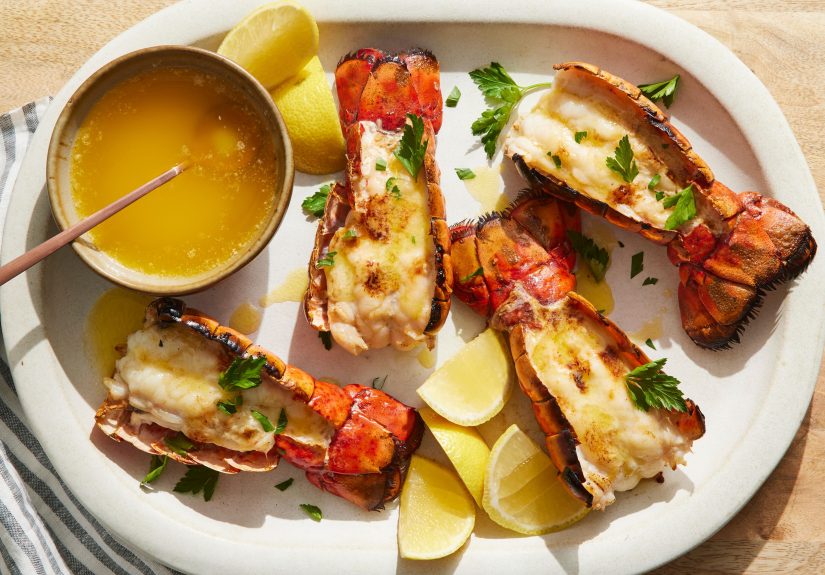
Grilling adds smoky flavor and a tiny bit of charbasically lobster’s glow-up moment.
The easiest way is to split/butterfly the tails so they cook evenly, then use a two-stage approach:
shell side down first to protect the meat, then a quick kiss on the meat side for grill marks (optional, but photogenic).
Grilling time: the practical window
For many medium tails, think about 5–7 minutes total with the lid closed, depending on heat and thickness.
A common method is 4–6 minutes shell-side down, then 30–60 seconds meat-side down just for color.
If you grill meat-side down first, keep it brief (around 2–3 minutes) and finish shell-side down over indirect heat.
Step-by-step: grill lobster tails (split tails, easiest method)
- Preheat the grill: Medium-high heat. Clean and oil the grates.
- Split and season: Cut the shell lengthwise, loosen meat, brush with butter or oil, season with salt and pepper.
- Start shell-side down: Place tails shell-side down. Close the lid and cook 4–6 minutes.
- Optional quick flip: Flip meat-side down for 30–60 seconds for grill marks.
- Check doneness: Meat opaque and firm; thermometer around 140–145°F at the thickest part.
- Serve: More butter. Always more butter.
Grilling tips for better texture
- Avoid flare-ups: Butter can drip and flame; keep a cooler zone (indirect heat) ready.
- Skewer to prevent curling: A simple skewer through the length helps tails lie flatter.
- Don’t walk away: Lobster goes from perfect to overdone faster than you can find your tongs.
Butter, Sauces, and Simple Seasonings That Actually Make Sense
Lobster is naturally sweet. Seasoning should enhance, not bulldoze. Here are crowd-pleasers that stay in lobster’s lane:
Classic drawn butter (quick version)
- Melt butter gently.
- Add a squeeze of lemon.
- Optional: pinch of salt, tiny bit of garlic, chopped parsley.
Garlic-lemon butter (for broiling or grilling)
Mix melted butter with minced garlic, lemon zest, salt, pepper, and a pinch of paprika. Brush before cooking, then brush again at the end.
If you love garlic, remember: raw garlic can burn under a broiler, so keep it subtle or add it after cooking.
How to Tell When Lobster Tails Are Done (Without Guessing)
- Color: Shell bright red; meat opaque white with a slight pearly look.
- Texture: Firm and springy, not mushy, not stiff like a stress ball.
- Thermometer: Thickest part around 140–145°F.
FAQs People Always Ask (Right Before Dinner)
Do I boil lobster tails in salted water?
Yessalted water improves flavor. You’re not trying to pickle the lobster, just season it like the ocean does.
Should I cut the shell before boiling?
You can. Cutting helps heat penetrate and makes serving easier. If you’re boiling tails specifically to remove meat for another recipe, pre-cutting is a nice time-saver.
Can I cook lobster tails from frozen?
It’s possible, but not ideal. The outside can overcook while the center catches up. If you must, expect longer cook time and check doneness carefully.
Thawing first gives you better texture almost every time.
Why did my lobster tail turn out tough?
Overcooking is the usual culprit. Lobster is lean and delicate; extra minutes don’t make it “safer,” they make it chewy. Next time, pull earlier and let residual heat finish the job.
Kitchen Notes: Real-World Lobster Tail Experiences (So You Don’t Learn the Hard Way)
If you’ve ever cooked lobster tails once a year (holidays, anniversaries, “we deserve it” Tuesdays), you’ve probably noticed they come with a little
emotional baggage. Not tragic baggagemore like “Why is this tail curling like a shrimp?” baggage. These are the most common kitchen experiences people run
into, plus what they teach you.
Experience #1: The timing panic. Lobster tails cook fast enough to make you question your ability to read a clock. You drop the tails in boiling
water, turn around to grab a plate, and suddenly you’re convinced you missed your moment. The fix is simple: decide your doneness plan before you start.
If you’re boiling, write down the minute-per-ounce time. If you’re broiling, set a timer for the low end of the range and check early. This is one of those
foods where “just one more minute” is rarely the hero of the story.
Experience #2: The center is translucent, the edges are done. This usually happens when tails weren’t fully thawed, or when a tail is thick in the
middle and you’re cooking purely by time. The lesson: lobster is a “thickness” cook, not just a “minutes” cook. Thaw overnight when you can, and keep a thermometer
handy for bigger tails. Even if you don’t use it every time, it’s like having a flashlight in a draweryou’re very glad it exists when you need it.
Experience #3: The broiler that acts like a space heater. Some broilers are fierce; others are… enthusiastic lamps. If you follow a recipe time
exactly and the lobster still looks underdone, your broiler may be on the gentle side, or your rack might be too low. The workaround is to preheat the broiler,
move the rack closer (carefully), and rely on the visual cues: opaque meat, lightly browned top, shell bright red. Once you learn your kitchen’s personality, you
can adjust without drama.
Experience #4: The butter flare-up on the grill. Butter and open flame are a lively duo. If you brush heavily and grill meat-side down first,
you may get surprise flames and a slightly scorched edge. Not a disaster, but not the goal. Many cooks learn to grill shell-side down first (the shell protects
the meat), use a moderate amount of butter, and keep an indirect-heat zone ready. The best grilling moments are calm momentswhen you’re in control of the heat,
not reacting to it.
Experience #5: The “why is it stuck to the shell?” problem. This can happen if tails are cooked from partially frozen, or if the meat wasn’t loosened
from the shell before cooking. A quick prep habit helps: run your fingers gently between meat and shell (or use a spoon) to loosen the meat before grilling or broiling,
especially if you plan to butterfly. The payoff is a tail that looks restaurant-pretty and serves easily.
Experience #6: The taste test that changes how you cook forever. Many people’s “aha” moment comes from pulling the tail earlier than they thought.
Properly cooked lobster is tender and juicy, with a clean sweetness. Overcooked lobster is firmer, drier, and oddly less flavorful. Once you taste the difference,
you start treating lobster like a delicate fish instead of a “keep boiling until I feel safe” ingredient. If you want one practical takeaway:
start checking early, not late.
Experience #7: The leftovers reality check. Lobster tails are best right away, but leftovers happen. Reheating can easily overcook them again, so the
gentlest approach wins: warm slowly (think low heat, short time) and add moisture (a bit of butter or a splash of broth). Or skip reheating entirely and use chilled
lobster in a salad or rollleftovers that taste intentional are the best kind.
Conclusion
Lobster tails don’t require a culinary degreejust a timer, decent heat control, and the confidence to pull them as soon as they’re done.
For boiling, the minute-per-ounce rule gets you in the zone fast. For broiling and grilling, splitting the shell and checking early keeps the meat sweet and tender.
When in doubt, aim for opaque meat and about 140–145°F in the thickest part, then let butter do what butter does best: make everything feel like a celebration.