Table of Contents >> Show >> Hide
- What Was the Xbox Kinect?
- The Meteoric Rise: When Kinect Looked Unstoppable
- Why Kinect Failed as a Gaming Revolution
- The Hackers Who Set Kinect Free
- Kinect in Robotics: The Little Camera That Helped Machines See
- Kinect in Healthcare and Rehabilitation
- 3D Scanning, Motion Capture, and Digital Creativity
- Kinect and the Rise of Everyday Computer Vision
- The Weird Uses: Ghost Hunting, Security, and Digital Folklore
- What Kinect Got Right
- What Kinect Got Wrong
- The Legacy of the Xbox Kinect
- Personal Experiences and Reflections: Why Kinect Still Feels Weirdly Alive
- Conclusion
The Xbox Kinect was supposed to make the controller disappear. Instead, it performed one of the strangest magic tricks in consumer tech history: it vanished from living rooms and reappeared in robotics labs, art galleries, hospitals, motion-capture studios, classrooms, hacker workbenches, and the occasional very confused ghost-hunting video.
When Microsoft launched Kinect for Xbox 360 in 2010, the pitch sounded like science fiction with better marketing: no controller, no buttons, no plastic tennis racket, just your body. You waved, jumped, leaned, spoke, and the console reacted. For a few years, Kinect looked like the future of gaming. Then, almost as quickly, it became a warning label for overhyped hardware. But the oddest part of the Kinect story is not its fall. It is what happened after the fall.
The strange afterlife of the Xbox Kinect is a story about how a gadget can fail in one market and become wildly useful in another. It is also a reminder that the most interesting technology often escapes the purpose printed on the box.
What Was the Xbox Kinect?
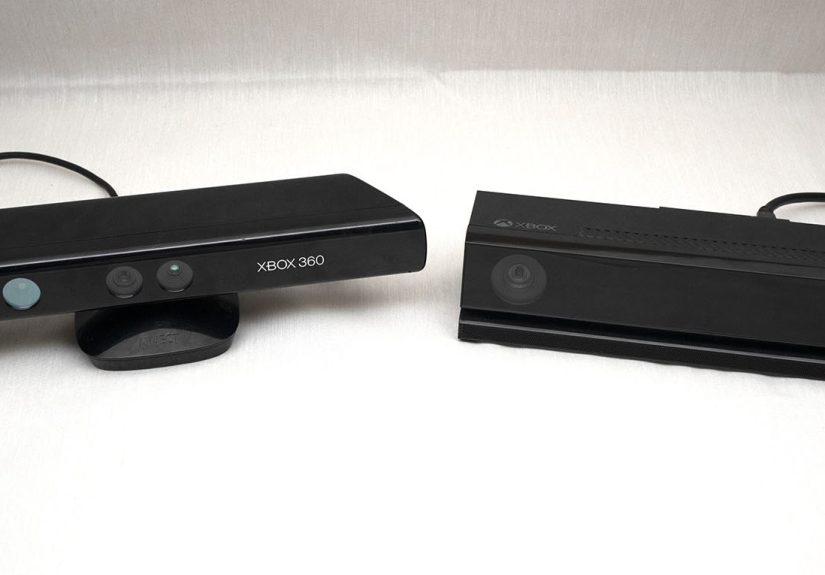
Kinect was Microsoft’s motion-sensing camera system for Xbox. The original Xbox 360 Kinect combined an RGB camera, infrared depth sensing, microphones, and software that could recognize bodies, gestures, voices, and movement. The simple consumer version of the idea was brilliant: the player became the controller.
Under the hood, Kinect was more than a webcam with ambition. The first model used infrared structured light technology to build a depth map of the room. In plain English, it could estimate how far objects and people were from the sensor. That depth information gave computers a rough 3D understanding of the real world, which was a big deal at a time when similar systems were often expensive, bulky, or locked inside specialized industrial setups.
For families, it meant dance games, fitness games, party games, and living-room bowling with fewer broken lamps than expected. For researchers and hackers, it meant something even better: a cheap 3D sensor that could be plugged into a computer and repurposed. That second audience would become the reason Kinect never truly died.
The Meteoric Rise: When Kinect Looked Unstoppable
Microsoft introduced Kinect during an era when the gaming industry was chasing motion controls. Nintendo had made the Wii a cultural phenomenon, and Sony had the PlayStation Move. Microsoft wanted something bigger and flashier. Kinect did not ask you to hold a wand. It asked you to stand in front of a camera and let the machine watch you flail with dignity.
The launch was enormous. Kinect sold millions of units quickly and earned recognition as one of the fastest-selling consumer electronics devices of its time. For Microsoft, this was proof that the living room was ready for “natural user interfaces,” a phrase that sounds like it was assembled in a conference room but still captured a real dream: computers should understand people more like people understand people.
Early Kinect games leaned heavily into accessibility and spectacle. Kinect Adventures! came bundled with many units and invited players to jump, dodge, and lean through bright obstacle courses. Dance Central made the hardware feel genuinely clever by turning full-body tracking into an energetic rhythm game. Kinect Sports gave families an excuse to bowl in socks. For casual gaming, Kinect had a moment. It was goofy, social, and immediately understandable.
Why Kinect Failed as a Gaming Revolution
The problem was not that Kinect had no good ideas. The problem was that it had too many ideas fighting physics, furniture, latency, lighting, and player expectations.
Living Rooms Were Not Laboratories
Kinect needed space. Not everyone had a roomy living room with perfect lighting, a clear floor, and enough distance between couch and television to perform a virtual javelin throw without frightening the dog. Small apartments, coffee tables, sunlight, dark clothing, and crowded rooms all made tracking harder. A standard controller worked on a dorm bed at 2 a.m. Kinect wanted you upright, visible, and committed.
Hardcore Gamers Did Not Want to Be the Controller All the Time
Motion control can be fun in short bursts, but many players prefer precision. A thumbstick, trigger, and button are boring in the same way a fork is boring: they work. Kinect often asked players to trade accuracy for novelty. That trade felt exciting during a party game and exhausting during anything requiring subtle control.
The Xbox One Bundling Backfired
Kinect’s most controversial chapter arrived with Xbox One. Microsoft initially positioned Kinect as central to the Xbox One experience, emphasizing voice commands, gesture navigation, sign-in recognition, and entertainment control. But bundling Kinect raised the console’s price and triggered privacy concerns. In 2014, Microsoft began selling a cheaper Xbox One package without Kinect. That move helped the console compete on price, but it also signaled that Kinect was no longer essential.
Once Kinect became optional, developers had less reason to build games around it. Optional hardware creates a chicken-and-egg problem: players do not buy it because games are scarce, and studios do not make games because players are scarce. By 2017, Microsoft stopped manufacturing the Kinect for Xbox. To gamers, it looked like the end. To everyone else, it looked like clearance season.
The Hackers Who Set Kinect Free
Kinect’s afterlife began almost immediately after launch. Developers and hardware tinkerers realized that Microsoft had accidentally released a low-cost 3D camera to the mass market. The device was sold as an Xbox accessory, but its parts were interesting far beyond Xbox.
Open-source developers worked quickly to access Kinect data on computers. The result was a wave of community tools and drivers, including projects that allowed Kinect to run on Linux, macOS, and Windows outside Microsoft’s official gaming environment. Once people could access the RGB camera, depth stream, motor, accelerometer, and other features, Kinect became a playground for experimentation.
This was the turning point. Kinect stopped being “that Xbox camera” and became a cheap depth sensor. That sounds less glamorous, but it was far more important. A cheap depth sensor meant students, artists, roboticists, researchers, and small studios could experiment with computer vision without buying equipment that cost more than a used car.
Kinect in Robotics: The Little Camera That Helped Machines See
Robotics may be the most important part of Kinect’s second life. Robots need to understand the spaces around them. They must detect walls, people, furniture, obstacles, floors, and motion. Before low-cost depth cameras became common, many robotics projects relied on expensive laser scanners or complicated camera setups.
Kinect changed the economics. A mobile robot equipped with Kinect could gather depth data and build a rough 3D picture of its environment. Researchers explored Kinect for simultaneous localization and mapping, better known as SLAM, which allows a robot to map an unknown area while tracking its own position. MIT researchers, for example, demonstrated systems that used low-cost cameras such as Kinect to help robots build and update 3D maps of changing environments.
Kinect was not perfect. The original version struggled outdoors, especially in direct sunlight, because infrared structured light can be washed out. Range and field of view were limited. Still, it was cheap, available, and good enough for many indoor experiments. In research, “good enough and affordable” often beats “excellent and financially terrifying.”
Kinect in Healthcare and Rehabilitation
Healthcare researchers also found Kinect useful because it could track body movement without requiring patients to wear complicated markers. Physical therapy and rehabilitation often depend on repeated exercises, accurate feedback, and patient motivation. Kinect offered an interactive way to monitor motion and turn exercises into guided activities.
Researchers studied Kinect-based systems for stroke recovery, physical therapy, balance training, and home rehabilitation. Microsoft Research worked on a Stroke Recovery with Kinect prototype that used the sensor to capture skeletal points as patients performed therapy movements. The goal was not to replace clinicians but to help measure progress and make home exercises more engaging.
The appeal is easy to understand. A patient doing therapy at home may not know whether a movement is correct. A Kinect-based system can provide basic feedback, record motion data, and make repetitive exercises feel less like homework assigned by a very serious gym teacher. In rehabilitation, motivation matters. If a motion-tracking system helps someone complete exercises consistently, the technology has value beyond novelty.
3D Scanning, Motion Capture, and Digital Creativity
Kinect also became popular in 3D scanning and motion capture. Its depth sensor allowed developers to capture shapes, rooms, bodies, and movements in ways that were previously harder or more expensive. Microsoft Research’s KinectFusion project showed how a moving Kinect camera could be used to create real-time 3D reconstructions of indoor scenes.
Artists embraced Kinect because it made bodies visible to software in real time. Interactive installations used Kinect to turn movement into light, sound, particles, shadows, and digital landscapes. Stand in front of a wall, wave your arms, and suddenly your silhouette could become smoke, stars, water, or a flock of geometric birds. Was it always profound? No. Was it frequently mesmerizing? Absolutely.
Independent creators used Kinect for experimental dance performances, projection mapping, virtual puppetry, and low-budget motion capture. For small studios, it offered a way to prototype body tracking without renting a professional mocap stage. The output was not Hollywood-level, but it was accessible, and accessibility is often where new art forms begin.
Kinect and the Rise of Everyday Computer Vision
The Kinect story matters because it helped normalize depth sensing. Today, depth cameras, face recognition, lidar, and AI-powered computer vision are part of phones, vehicles, robots, retail systems, and augmented reality devices. Kinect did not create all of that by itself, but it helped bring the idea into public view.
PrimeSense, the company behind key technology used in the original Kinect, was later acquired by Apple. Microsoft, meanwhile, continued exploring depth sensing through products and platforms such as HoloLens and Azure Kinect. Azure Kinect DK, introduced for developers and businesses, included a time-of-flight depth camera, microphone array, RGB camera, and motion sensors. It was not a gaming peripheral. It was Kinect’s professional descendant wearing a business badge and trying not to look like it had once been used for living-room volleyball.
Even Azure Kinect was eventually discontinued as a hardware kit, but the larger direction remained clear: the Kinect idea had migrated from console accessory to computer-vision infrastructure. The body-tracking dream had grown up and moved into enterprise, research, robotics, mixed reality, and AI development.
The Weird Uses: Ghost Hunting, Security, and Digital Folklore
No Kinect afterlife article would be complete without mentioning the weird stuff. Because Kinect can detect skeleton-like shapes, it became popular in online ghost-hunting content. Videos showed the sensor identifying stick-figure forms in empty rooms, and viewers debated whether Kinect had detected spirits, glitches, furniture, reflections, or the ghost of Microsoft’s marketing department.
The reasonable explanation is that skeleton tracking was designed to interpret noisy depth data and fit it to human-like models. In unusual environments, software can misread shapes. A chair, a coat rack, shadows, or sensor noise may produce strange results. That did not stop the internet from turning Kinect into a paranormal prop. In a way, that is perfectly on brand: a device designed to see bodies became famous for seeing bodies that were not there.
Kinect-like systems also appeared in security, training, retail, education, accessibility experiments, and industrial prototypes. Some uses were serious; others were deeply odd. That mix is exactly why Kinect’s second life is so fascinating. It was not a clean corporate pivot. It was a messy, creative, community-driven migration.
What Kinect Got Right
Kinect failed to become the universal future of gaming, but it got several things right.
It Made Advanced Sensing Affordable
The biggest achievement was price. Kinect put a depth camera into millions of homes. That lowered the barrier for experimentation and helped students, artists, and engineers build projects that would otherwise have stayed theoretical.
It Made Interfaces Feel Physical
Even when Kinect games were clumsy, the concept was powerful. Computers could respond to bodies, not just keyboards and controllers. That idea now appears in VR, AR, fitness apps, smart cameras, automotive systems, and accessibility tools.
It Inspired a Maker Movement
Kinect arrived at the right cultural moment. Open-source hardware, GitHub, maker spaces, Arduino, robotics clubs, and DIY electronics were gaining energy. Kinect gave that community a new toy with serious technical depth. The result was a burst of projects that Microsoft never could have planned alone.
What Kinect Got Wrong
Kinect also made mistakes that modern hardware companies should study carefully.
First, it overpromised. The fantasy of perfect full-body control was easier to advertise than to deliver. Second, it underestimated how much gamers value reliability and precision. Third, it became tied to a console strategy that made some customers feel forced into paying for hardware they did not want. Finally, its best uses often required developer creativity outside the original Xbox ecosystem.
That last point is the irony at the heart of Kinect. Microsoft sold it as a gaming revolution, but the world found more interesting uses for it after moving it away from gaming.
The Legacy of the Xbox Kinect
The Kinect legacy is not a simple success or failure. It is both. As a mandatory console accessory, it became a cautionary tale. As a low-cost depth sensor, it became a landmark in computer vision culture. It helped popularize body tracking, inspired research, supported rehabilitation prototypes, powered art installations, and introduced millions of people to the idea that computers could understand physical space.
The strange afterlife of the Xbox Kinect proves that innovation does not always land where companies aim it. Sometimes the market says no, the hackers say yes, and the real future slips out through the USB port.
Personal Experiences and Reflections: Why Kinect Still Feels Weirdly Alive
Spending time with the Kinect story feels like digging through a garage and finding an old gadget that somehow knows more about the future than the shiny devices on your desk. The Kinect has that strange quality. It looks dated now: glossy black plastic, chunky body, cable drama, and a design that screams “2010 living room optimism.” Yet the ideas inside it still feel current.
The first experience many people had with Kinect was not technical at all. It was social. Someone cleared space in front of the television. Someone else insisted the sensor was not seeing them. A third person performed a dance move with the confidence of a pop star and the coordination of a folding chair. Kinect made gaming visible to everyone in the room. Even failure was part of the entertainment. When tracking went wrong, people laughed. When it worked, it felt like a small miracle.
That is why Kinect remains memorable even for people who stopped using it quickly. It created stories. Controllers disappear into habit, but Kinect turned the whole room into a stage. It made parents try games. It made kids jump around. It made friends compete in ways that looked ridiculous from the couch. Not every session was smooth, but many were unforgettable.
Later, discovering Kinect’s non-gaming uses changes how the device looks in hindsight. A dusty sensor at a thrift store is not just an abandoned Xbox accessory. It is a symbol of accessible computer vision. For students, it became an entry point into robotics. For artists, it became a motion brush. For rehabilitation researchers, it became a possible home-therapy tool. For developers, it became a cheap way to explore depth, gesture, and spatial computing.
There is also something charming about how uncontrolled Kinect’s legacy became. Companies like neat product categories: console accessory, developer kit, enterprise sensor. Real users are messier. They attach the thing to robots, point it at dancers, scan furniture, track therapy movements, build interactive walls, and test ideas nobody mentioned in the launch presentation. Kinect’s afterlife feels alive because it was not fully managed. It escaped.
The device also teaches humility. Big tech companies often predict the future with great confidence, but users decide what technology is actually good for. Microsoft thought Kinect would transform console gaming. Instead, it helped democratize depth sensing. That is not a small achievement. In fact, it may be more important than the original goal.
Looking back, Kinect feels less like a failed product and more like a successful accident. It did not replace the controller. It did not become the center of Xbox. It did not make every gamer excited to wave at menus. But it gave a generation of creators an affordable way to teach computers about bodies and space. That is a strange afterlife, yes, but also a pretty good one.
Conclusion
The Xbox Kinect is one of the most unusual devices in gaming history because its greatest influence happened after its commercial spotlight faded. It began as a bold promise: your body would become the controller. In the gaming market, that promise was only partly fulfilled. Kinect was fun, flawed, ambitious, and sometimes awkward. But outside gaming, it became something richer: a low-cost 3D vision tool that helped artists, researchers, roboticists, clinicians, students, and hackers imagine new ways for computers to see the world.
The strange afterlife of the Xbox Kinect is not just a quirky tech footnote. It is a lesson in unexpected innovation. A product can miss its intended target and still change the landscape. Kinect may be gone from modern Xbox consoles, but its influence lives on every time a device recognizes a face, maps a room, tracks a body, or turns physical movement into digital action. Not bad for a camera that once asked people to move the coffee table.